
 Print
Print Word
Word PDF
PDF|
This section contains 2,743 words (approx. 10 pages at 300 words per page) |

|
Dictionary of Literary Biography on Vasko Popa
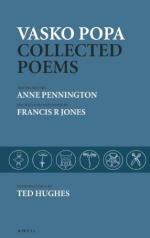
Vasko Popa is a poet of towering stature in contemporary Yugoslav literature. His poetic achievement--eight slim volumes of verse written over a period of thirty-eight years--has received extensive critical acclaim both in his native land and beyond, in Europe and the United States, where his works, which have been widely translated, have reached a remarkably diverse audience. His eight collections have been translated into English in their entirety, in different editions, by Anne Pennington in Great Britain and distinguished poet Charles Simic in the United States. Additionally, his collections have given rise to an extensive critical apparatus, including several books devoted exclusively to his poetry.
Popa, who often spent years working on a single book, was not a prolific poet; yet with each of his eight collections he channeled the development of contemporary poetry in Yugoslavia in new directions. His first book, Kora (Bark), was the cause of...
|
This section contains 2,743 words (approx. 10 pages at 300 words per page) |
|



