BookRags.com Literature Guides Literature
Guides
Criticism & Essays Criticism &
Essays
Questions & Answers Questions &
Answers
Lesson Plans Lesson
Plans
My Bibliography Periodic Table U.S. Presidents Shakespeare Sonnet Shake-Up
Research Anything:        
History | Encyclopedias | Films | News | Create a Bibliography | More... Login | Register | Help

Search "Sue Townsend"

Biographies Navigation
 
Not What You Meant?  There are 144 definitions for Townsend.

Sue Townsend Biography

Print-Friendly  Order the PDF version  Order the RTF version
About 5 pages (1,443 words)
Sue Townsend Summary

Bookmark and Share Know this topic well? Help others and get FREE products!
Name: Sue Townsend
Birth Date: April 2, 1946
Place of Birth: Leicester, Leicestershire, England
Nationality: British
Gender: Female
Occupations: Writer

Authors and Artists for Young Adults on Sue Townsend

Sue Townsend, who got her start as a writer for the theater, penned a series of fictional diaries of a self-obsessed teenager that critics deemed one of the literary phenomena of the 1980s. A runaway bestseller in Great Britain, The Secret Diary of Adrian Mole, Aged 13 3/4 led not only to additional diaries but to a television program and a musical play as well as a computer game and other consumer items. In the United States, where the books first appeared as The Adrian Mole Diaries, reviewers wondered whether American youth would follow Adrian's use of British slang, and whether American readers would be as intensely moved as the British public by the books' detailed satire of the decay of living standards under Prime Minister Margaret Thatcher. The nearly invariable conclusion was that Townsend's "funny, poignant, sardonic but also compassionate" fictional diaries, in the words of New York Times Book Review critic Norma Klein, "deserve at least some portion of the attention they received in their native country."

Townsend began her writing career as a playwright, after spending many years in menial jobs to support herself and her four children. Critics note that her feisty, at times embittered female characters, as well as the often weak-willed and morally spineless male characters in her works, may well be a product of the author's own unhappy experiences with the opposite sex, particularly with the husband who abandoned her and their children when she was in her early twenties. "That the mass of women lead lives of quiet desperation is one of Sue Townsend's recurrent themes, and their liberation from boring or violent men one of her favourite fantasies," observed Shena Mackay in the Times Literary Supplement. Townsend's first play, Womberang, features Rita Onions, a woman who rallies and cajoles the other patients in a gynecological waiting room into discarding their fear of authority and standing up for themselves. In the farcical Bazaar and Rummage, a group of agoraphobics is bullied into hosting a rummage sale by their manipulative social worker. "By dramatising fear, Townsend encourages people to see problems not as personal failures but as part of a larger social pattern," noted John Lahr in New Society. Thus, in another early play, Groping for Words, Townsend casts the British education system as an instrument of class control through her portrayal of characters who go through elaborate ruses in order to hide their illiteracy from society at large. Townsend's "characters are affectionately drawn" in these short pieces, according to Diana Devlin, who critiqued the published collection of these plays in Drama, and "her situations capture the bizarre aspects of what passes for 'normal' life."

Townsend's sharply humorous plays and stories demonstrate that she is "a satirist of the first order," according to Emily Melton in a Booklist review of Adrian Mole: The Lost Years. Melton added: "Without ever being maudlin, cruel, silly, or sentimental, [Townsend] provokes sidesplitting laughter, a few tears, and a wonderfully warm feeling that there is indeed hope for the planet." In The Secret Diary of Adrian Mole, Aged 13 3/4 and its several sequels, the objects of Townsend's satire include the feckless sixties generation as adults and the quality of British life under Prime Minister Margaret Thatcher. Townsend's title protagonist is sanctimonious, snobbish, gloomy, and whiny all at the same time. During the year chronicled by the first diary, Adrian recounts the ongoing battles between his parents, culminating in his mother running off with the next-door neighbor; the loss of his father's job; being bullied at school; his unrequited love for Pandora, a classmate of higher social status; his worries over pimples and the size of his penis; and the time he spends with a cranky retiree as part of a Good Samaritans project. The Growing Pains of Adrian Mole, the second volume of the diary, documents ages fifteen to sixteen, including the birth of Adrian's baby sister, a blind date, the continued extra-marital affairs of both of his parents, and running away from home--even though no one takes much notice.

The first two volumes of the diary were published in the United States under one cover with the title The Adrian Mole Diaries, along with the addition of a glossary of British terms, which appears in the form of a letter from Adrian to Hamish Mancini, who has asked him to explain certain things. For readers in the United States, this was followed by Adrian Mole: The Lost Years, in which Adrian's diaries track his angst-ridden progress into his early twenties. The main action of this latter story concerns the fate of young writer Adrian's first novel, which at seven hundred pages contains no vowels, and of his love life. When Adrian's novel, "Lo! The Flat Hills of My Homeland," is rejected by several publishers, he determines to add vowels and more sex to spice up his story. School Library Journal contributor Grace Baun dubbed Adrian Mole: The Lost Years "very funny and entertaining," and while many reviewers continued to remark on the success of the ongoing diaries' humorous depiction of young manhood, it was also frequently noted that Mole's observations of his world simultaneously paint a fairly grim picture of life among the British lower-middle classes during Margaret Thatcher's tenure as prime minister. Indeed, it is this element that distinguishes the Adrian Mole Diaries from mere "harmless fun," according to William Grimes of the Village Voice. "What makes the diaries something more is their sharply observed social realism, which gives, in quick takes, a picture of shabby lower-middle-class life in the English Midlands. It succeeds brilliantly in conveying the texture of life among Britain's 'nouveau poor' (as Adrian's mother refers to the Mole family)."

Indeed, partly because of this issue, there was some question among critics whether the Mole books should truly, or solely, be considered young adult fare. Several commentators pointed out that despite his centrality to the novels, "the subject matter is not Adrian Mole's growing pains," as Nigel Andrew asserted in the Listener, "but the pains and idiosyncrasies of the various adult characters, comically refracted in Mole's dawning consciousness." Other critics questioned the suitability of the language for this age group, first because the use of British slang and brand names might cause some readers difficulty, and second because of the use of obscene language. "My fear for Adrian Mole in America," asserted New York Times Book Review contributor Norma Klein, "is that ... he will be perceived as falling between two stools: too radical and shocking for teen-agers, at least as they are seen by the library establishment, but uninteresting to adults by virtue of being under college age. Yet it is hard to conceive of anyone of either age group with even a passing interest in the best contemporary fiction who will not find the diaries a delight."

"Children take to the books partly, I gather, because the disgusting details of Adrian's spots, the mention of his wet dreams and of his regular measuring of his 'thing', break taboos," observed Peter Campbell in the London Review of Books. "But more because--despite his hypochondria, his naff intellectual ambitions, his deeply untrendy tastes--he is a hero who suffers as they suffer." Townsend herself speculated in a 1987 interview with Contemporary Authors on the source of Mole's popularity with readers worldwide: "Adolescence is such a strong experience, and the emotions bound up in it are so common to all of us, that everybody recognizes those feelings. And I think to a certain extent everybody sees himself as this brave little soldier plodding through life, misunderstood by the rest of the world."

"Dear Mole. He is, for me, one of the key literary characters of our time," sighed a reviewer for the Times Educational Supplement. However, few American critics responded this extravagantly to Adrian Mole, the character on whom Townsend's reputation is substantially based, though several compared him to J. D. Salinger's central protagonist in his classic novel of youthful angst, Catcher in the Rye. Some reviewers in the United States expressed a doubt whether young adult readers would be able to make sense of Adrian's British slang, and others claimed that young readers, failing to grasp the social and political satire of the books, would merely be pleasantly scandalized by Adrian's wry observations. Others have maintained that Adrian's humorous experiences and the emotions that they engender are universal.

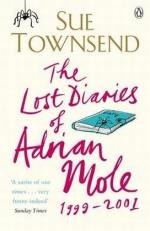
By the end of the 1990's, Townsend had finished work on no less than ten Adrian Mole titles; these works followed Adrian from age 13-3/4 to 30. In the latest of these, Adrian Mole: The Cappuccino Years (1999), thirty-year-old Adrian is separated from his Nigerian wife, and finds himself a single parent to his three-year-old son.

This is the complete article, containing 1,443 words (approx. 5 pages at 300 words per page).

View More Summaries on Sue Townsend
More Information
  • View Sue Townsend Study Pack
  • 144 Alternative Definitions
  • Search Results for "Sue Townsend"
  • Add This to Your Bibliography
  • More Products on This Subject
    Sue Townsend
    In the realm of publishing, novelist Sue Townsend dominated England in the 1980s. Creator of Adrian... more

    Sue Townsend
    Susan Lillian "Sue" Townsend (born April 2, 1946) is the author of the Adrian Mole series of books. ... more


    Ask any question on Sue Townsend and get it answered FAST!
    Answer questions in BookRags Q&A and earn points toward
    discounted or even FREE Study Guides and other BookRags products!
    Learn more about BookRags Q&A
    Copyrights
    Sue Townsend from Authors and Artists for Young Adults. ©2005-2006 Thomson Gale, a part of the Thomson Corporation. All rights reserved.

    Join BookRagslearn moreJoin BookRags


    About BookRags | Customer Service | Report an Error | Terms of Use | Privacy Policy