
 Print
Print Word
Word PDF
PDF|
This section contains 16,474 words (approx. 55 pages at 300 words per page) |

|
on Stephen Crane
Biography Essay
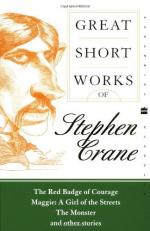
A precursor of the imagists in poetry and of the novelists writing the new fiction of the 1920s, Stephen Crane was one of the most gifted and influential writers of the late nineteenth century, noted for his brilliant and innovative style, his vivid, ironic sense of life, and his penetrating psychological realism. Unusually precocious, he wrote his first novel, Maggie: A Girl of the Streets (1893), when he was only twenty-one and had his masterpiece, The Red Badge of Courage (1895), published before he was twenty-four. When he died in 1900 at the age of twenty-eight, from tuberculosis and the effects of his exhausting life as adventurer and war correspondent, he had written, in addition to his voluminous war reportage and numerous incidental pieces, six novels, well over a hundred stories and sketches, and two books of poems-enough all together to fill ten large volumes in the University Press...
|
This section contains 16,474 words (approx. 55 pages at 300 words per page) |
|



