
 Print
Print Word
Word PDF
PDF|
This section contains 4,072 words (approx. 14 pages at 300 words per page) |

|
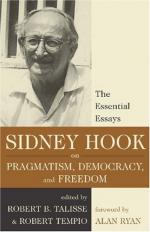
Dictionary of Literary Biography on Sidney Hook
Although Sidney Hook's academic work spans the gamut of philosophical inquiry, from metaphysics and epistemology to ethics, aesthetics, and philosophy of education, a set of central concerns runs through all of his work. These concerns, which reflect the influence John Dewey exerted on Hook's thinking, are democracy, freedom, and intelligence. They coalesce in the question that Hook endeavored to answer throughout his career: how can the best available methods of inquiry be applied to the most pressing problems of human life in a way that both responds to those problems and establishes and nurtures the conditions that enable further progress in the amelioration of human ills"
Saul Hook was born in the Williamsburg area of Brooklyn, New York, on 20 December 1902, the fourth child of the Jewish immigrants Isaac Hook, a factory worker from Moravia in the present-day Czech Republic, and Jennie Halpern Hook, from Galicia in present-day Poland...
|
This section contains 4,072 words (approx. 14 pages at 300 words per page) |
|



