
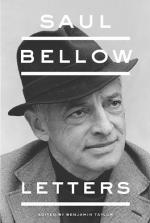
 Print
Print Word
Word PDF
PDF|
This section contains 7,824 words (approx. 27 pages at 300 words per page) |

|
Dictionary of Literary Biography on Saul Bellow
Saul Bellow claims the writer is a moralist, obliged to affirm the possibilities for individual life in the human community. Despite literary realism's "myth of the diminished man" and disparagement of modern civilization, Bellow finds a chance for "selfhood" in the modern world. Still he admires such modern masters as Conrad, Dreiser, Lawrence, Joyce, and Cary, and he draws materials and techniques from realism. He immerses his protagonists in a "multiplication of facts and sensations" which threatens to suffocate their selfhood. His fiction's density of specification is an analogue of the human problem it engages. In The Adventures of Augie March (1953), Augie articulates the dilemma: "there's too much history, too much example, too much influence, too many guys who tell you to be as they are, and all this hugeness, abundance, turbulence, Niagara Falls torrent." Bellow reassesses the human situation within this torrent.
He directs his affirmations against...
|
This section contains 7,824 words (approx. 27 pages at 300 words per page) |
|



