Forgot your password?  

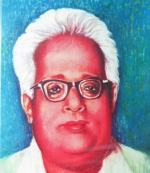
Satyendranath Bose | Biography

This Biography consists of approximately 5 pages of information about the life of Satyendranath Bose.
This section contains 1,267 words
(approx. 5 pages at 300 words per page)

World of Physics on Satyendranath Bose

Satyendranath Bose was a physicist whose derivation of Max Planck' s black body radiation law--a fundamental law of quantum theory that is concerned with the concept of energy transfer associated with light, x rays, and other radiations--verified Albert Einstein' s concept of photons and played a major role in the development of quantum statistics and theoretical physics. Einstein used his influence to have Bose's groundbreaking paper published while building upon it to develop a system of quantum statistical mechanics known as Bose-Einstein statistics. As a result of Bose's contribution to the field, bosons--certain subatomic particles of finite mass studied in quantum physics using the Bose-Einstein statistical approach--were named after him.

Although Bose published a relatively low number of original papers throughout his scientific career, his interests in physics and mathematics were wide ranging and included statistical mechanics, electromagnetics, x-ray crystallography, and the unified field theory. Still, Bose failed to develop the worldwide reputation enjoyed by Einstein, who readily acknowledged Bose's contribution as the major step in the development of quantum statistical mechanics. Within India, Bose was highly regarded for both his scientific and political accomplishments, being among a group of pioneering nationalist scientists and intellectuals who helped spur colonial India's independence movement from Great Britain.

Born in Calcutta, India, on January 1, 1894, Bose was the son of Surendranath Bose, an accountant who would eventually found the East India Chemical and Pharmaceutical Works, and Amodini Raichaudhuri. His education began in the English-language schools set up by the British during their colonial reign over India, but he was soon transferred by his father to a Bengali-language school during the resurgence of Bengali nationalism in 1907 (Bengal is a region in the northeast section of the Indian peninsula). After graduation from secondary school, Bose attended Presidency College in Calcutta, where he studied under noted Indian physicist Jagadischandra Bose (no relation). In 1915 Bose continued his postgraduate studies at the university and finished first in his class with an M.Sc. degree in mathematics. Two years later he became a lecturer in the physics department at the University of Calcutta's college of science, which was established in 1914 and was the first Indian college to offer advanced science studies.

Bose's interest and natural gifts in mathematics soon became evident with the publication of two papers he coauthored with Meghnad Saha on the equation of state. In 1919 they coedited one of the first anthologies in English of Einstein's scientific papers on relativity. Then, in the next year, Bose published his first paper on quantum statistics in the Philosophical Magazine.

In 1921, Bose accepted a position as a reader, or professor, at the University of Dacca, a newly established university in East Bengal. At Dacca, Bose focused his attention on the statistics of photons, a quantum of electromagnetic energy that has no charge or mass but carries energy such as light and x rays in both wave and particle form. In an interview with American physicist William A. Blanpied for the American Journal of Physics, Bose commented that he "spent many sleepless nights" contemplating Planck's law. Finally, according to Bose, a new theory for quantum mathematics dawned on him while he was lecturing in class one day. By 1923, he had written and submitted a paper on his new theory to Philosophical Magazine, but it was rejected.

Bose was persistent, however, and sent the article to Einstein along with a letter requesting his assistance. Einstein, who in 1905 had first tried to prove that electromagnetic radiation had an atomic structure made up of a measurable, or quantum, amount of electromagnetic energy, was impressed with Bose's theory. Essentially, Bose had succeeded in substantiating Einstein's proposal where Einstein himself and others had failed. With Einstein's endorsement and translation into German, Bose's paper, "Planck's Law and the Hypothesis of Light Quanta," was published in Zeitschrift Für Physik in 1924.

Bose's paper focused on how to derive Planck's black body radiation law, in which the black body is a theoretical ideal body that absorbs all radiation and reflects none. Planck's equation describes the spectral energy distribution from such a body. Einstein's 1905 paper questioned Planck's assumption that his law could be applied ad hoc to unquestionable classical electrodynamics laws (electrodynamics is a discipline within physics concerned with the inter-relatedness of electric and other currents and magnets). In Einstein's thermodynamic approach, the quantum structure of electromagnetic radiation could be viewed the same as an ordinary gas and its atomic structure. Without reference to classical electrodynamics, Bose used a phase-space approach that treated radiation as an ideal gas to show that Einstein's model and Planck's law were consistent. Bose's paper both vindicated Einstein's theory and pointed the way for future developments in electrodynamics.

Unfortunately, Bose concentrated on the mathematical implications of his work and was not as quick to see the far-reaching ramifications it had in the field of physics, especially in the areas of electrodynamics and quantum gases. As a result, he failed to gain the international renown of such famous physicists as Planck and Einstein, who, building on Bose's work, developed the foundation for the Bose-Einstein statistics. This statistical approach to quantum physics was the first of two approaches to determine the distribution of certain subatomic particles among the various possible energy values. Depending on the approach used, the particles that adhere to these mathematical laws are known as bosons--named after Bose--or fermions, named after the developer of the second approach, Enrico Fermi.

Although Einstein's endorsement and further support led to Bose leaving India for two years to study in Germany and France, Bose's dream of working with Einstein never materialized; in fact, the two scientists had only one brief personal meeting. In 1926, Bose returned to Dacca and became a professor of physics. Dedicated to his teaching duties, Bose's production of scientific papers was, by many standards, meager, amounting to only twenty-six original papers focusing on mathematical statistics, electromagnetic properties of the ionosphere, x-ray crystallography, thermoluminescence, and the unified field theory.

Bose was appointed in 1945 as the Khaira Professor of Physics at Calcutta University. In 1956, he became vice-chancellor of Visva-Bharati University, which was established by Rabindranath Tagore, who had won the Nobel Prize in poetry. He was then appointed a national professor by the Indian government in 1959.

Bose married Ushabala Ghosh in 1914; the couple had two sons and five daughters. Devotedly nationalistic during the days of British rule, Bose abhorred the fact that some people thought he was German. He remained dedicated to his country and particularly to the Bengali cultural renaissance. He was among a core group of Indian intellectuals who assisted with India's political emergence, primarily by instilling pride in the intellectual capabilities of the populace. The founder of the Science Association of Bengali in 1948, which helped popularize science in his native language, Bose also served in the Indian parliament from 1952 to 1958 and as president of the National Institute of Sciences of India. He received India's Padma Vibhushan award from the government in 1954, and, in 1958, was elected to the Royal Society. Fluent in Bengali, Sanskrit, English, and French, Bose loved poetry.

Bose died on February 4, 1974, in Calcutta. Jagadish Sharma, who studied physics under Bose, commented in Bose's obituary in Physics Today that the scientist's remarkable rise to "the highest echelons of science" must be placed in the context of an India that was ruled by Great Britain. Such an environment was not conducive to fostering the native Indian intellect, Sharma noted, evidenced by the "very few Indian scientists of international reputation." Sharma also added that Bose's kindness was endearing to all and that he "was liberal with his pocketbook whenever the situation demanded."

This section contains 1,267 words
(approx. 5 pages at 300 words per page)
Copyrights
Satyendranath Bose from World of Physics. ©2005-2006 Thomson Gale, a part of the Thomson Corporation. All rights reserved.
Follow Us on Facebook
Homework Help