
 Print
Print Word
Word PDF
PDF|
This section contains 18,902 words (approx. 64 pages at 300 words per page) |

|
on Samuel Richardson
Biography Essay
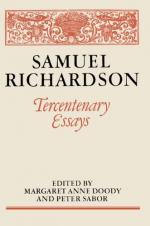
Samuel Richardson, often in his own time compared to Shakespeare for universality, originality, and emotional truth, is generally acknowledged as the founder of a new school of novel writing in England. The new novel had its origins partly in English domestic fiction, particularly fiction by women; in Richardson's work the story of rape or courtship acquired massive force and philosophical complexity. The origins of the new fiction are also partly to be found in seventeenth-century works of religious selfexamination, both Catholic and Protestant. Richardson's novels, all epistolary, concentrate on the inner thoughts and states of the individual. The individual is, however, always involve'd in social relationships, and many scenes are presented dramatically; Richardson makes references to tragic and comic drama of the seventeenth and eighteenth centuries. There is, even in his tragic or pathetic work, a range of comic devices and insights, sometimes even a wild...
|
This section contains 18,902 words (approx. 64 pages at 300 words per page) |
|



