
 Print
Print Word
Word PDF
PDF|
This section contains 10,295 words (approx. 35 pages at 300 words per page) |

|
on Samuel Beckett
Biography Essay
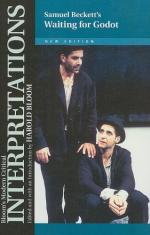
Samuel Beckett, whose play Waiting for Godot has influenced several generations of contemporary playwrights throughout the world, was a dramatist who considered himself a much better novelist. He thought of his plays as diversions undertaken at times when work on his fiction brought him to a creative impasse, but since Waiting for Godot was first performed (as En attendant Godot) in Paris on 5 January 1953, the greater part of his literary career resulted in some form of writing for the theater.
An Irishman who lived in Paris since 1938, Beckett wrote in French and was a one-time follower of the other great Irish writer in exile, James Joyce. He has been lumped loosely at various times with groups ranging from the French nouveau roman to the existentialists, and his plays place him in the center of the theater of the absurd, one of the major movements in modern...
|
This section contains 10,295 words (approx. 35 pages at 300 words per page) |
|



