
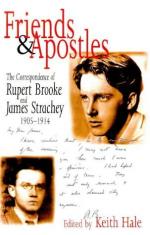
| Name: |
Rupert Brooke |
| Birth Date: |
|
| Death Date: |
|
| Place of Birth: |
|
| Place of Death: |
|
| Nationality: |
|
| Gender: |
|
| Occupations: |
|
The English poet Rupert Brooke (1887-1915) was the poet-patriot hero of World War I. He is the most famous representative of Georgian poetry, a short-lived literary movement of the early 20th century.
Rupert Brooke was born on Aug. 3, 1887, at Rugby, where his father was a master at the school. At Cambridge University, Rupert achieved distinction as a scholar. Remarkably handsome and a superb athlete, he had a romantic disposition, evident in his undergraduate poetry, which ranged from the exuberantly amorous to the fashionably cynical. Like other youthful poets of this period, he vowed a rebellion against Victorianism. Mistrustful of Victorian sentimentalism and the devotion to beauty of the fin de siècle, the new poets dedicated themselves to achieve "realism" or "truth to life." The intent of this rebellion was to produce vigorous and simple poetry which shunned affectedly literary phrasing and relied on a diction appropriate to the incidents of life which it portrayed.
This "realism" in Brooke's first volume, Poems (1911), was to excite some opposition from critics who found it too "coarse," but otherwise it received little attention. Brooke and his friend and mentor Edward Marsh conceived the idea of an anthology of the works of contemporary new poets in order to develop a new audience for poetry. Walter de la Mare, John Masefield, D. H. Lawrence, and others contributed poems, and the resulting volume, Georgian Poetry, appeared at the end of 1912. The volume was instantly and continuously successful, and Georgian poetry became a recognized movement, with Brooke as its dominant figure.
But before the second volume of Georgian Poetry was published in 1915, Brooke had died. Disenchanted, after some years of travel, with "a world grown old and cold and weary," he had, like many of his young and idealistic contemporaries, responded to the declaration of war in 1914 with enthusiastic idealism. While not on active service, Brooke died of blood poisoning at Skyros in the Aegean Sea on April 23, 1915. His death in the midst of popular success as a poet and within a year of the publication of his war sonnet "The Soldier" excited a deep response not only from contemporary poets, who published moving tributes, but also from politicians and from the general public.
Despite the banner of poetic revolution under which it was published, Brooke's verse is seen in retrospect to consist only in the simple, direct expression of sentiments traditional to the young romantic of English poetry, or sometimes, as in "The Great Lover," merely in the rhetorical exaggeration of the commonplace. Like most of the poems in Georgian Poetry, his work is often meditative, imbued with a love of the English countryside, spiced by an easy sense of disillusionment at the transience of deeply cherished earthly experiences, and moved by an expressed desire for order and certainty and peace in a world seemingly less ordered than the playing fields and gardens and villages of Brooke's childhood.
This is the complete article, containing 485 words
(approx. 2 pages at 300 words per page).
View More Summaries on Rupert Brooke

