
 Print
Print Word
Word PDF
PDF|
This section contains 2,599 words (approx. 9 pages at 300 words per page) |

|
on Rupert Brooke
Biography Essay
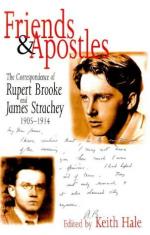
At the time of his death in 1915, Rupert Brooke was considered to be England's foremost young poet. A golden-haired, blue-eyed English Adonis, Brooke was the epitome of doomed youth, of the generation that was killed in the trenches of World War I. The war sonnets, written in Antwerp, Belgium, where Brooke first experienced war, and published in New Numbers in December 1914, catapulted him to virtually worldwide eminence. These sonnets, the culmination of a brief poetic career, represent the perfect coincidence of man, voice, and occasion. Though Brooke first greeted war with nonchalance — "Well, if Armageddon's on, I suppose one should be there" — he ran to it like a swimmer "into cleanness leaping": "Now, God be thanked Who has matched us with His hour, / And caught our youth and wakened us from sleeping. . . ." Brooke's sonnets are a clarion call to arms:
Blow out, you bugles...
|
This section contains 2,599 words (approx. 9 pages at 300 words per page) |
|



