
 Print
Print Word
Word PDF
PDF|
This section contains 1,500 words (approx. 5 pages at 300 words per page) |

|
Encyclopedia of World Biography on Ruhollah Musavi Khomeini, Ayatollah
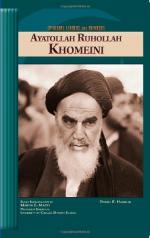
Ayatollah Ruhollah Musavi Khomeini (1902-1989) was the founder and supreme leader of the Islamic Republic of Iran. The only leader in the Muslim world who combined political and religious authority as a head of state, he took office in 1979.
Ayatollah Khomeini was born on September 24, 1902, according to most sources. The title Ayatollah (the Sign of God) reflected his scholarly religious standing in the Shia Islamic tradition. His first name, Ruhollah (the Spirit of God), is a common name in spite of its religious meaning, and his last name is taken from his birthplace, the town of Khomein, which is about 200 miles south of Tehran, Iran's capital city. His father, Mustapha Musavi, was the chief cleric of the town where he was murdered only five months after the birth of Ruhollah. The child was raised by his mother (Hajar) and aunt (Sahebeh), both of whom died when Ruhollah was...
|
This section contains 1,500 words (approx. 5 pages at 300 words per page) |
|



