
BookRags.com Literature Guides Literature
Guides
Criticism & Essays Criticism &
Essays
Questions & Answers Questions &
Answers
Lesson Plans Lesson
Plans
My Bibliography Periodic Table U.S. Presidents Shakespeare Sonnet Shake-Up
Research Anything:        
History | Encyclopedias | Films | News | Create a Bibliography | More... Login | Register | Help

Search "Robert Hooke"

Biographies Navigation
 
Not What You Meant?  There are 9 definitions for Hooke.

Robert Hooke Biography

Print-Friendly  Order the PDF version  Order the RTF version
About 2 pages (462 words)
Robert Hooke Summary

Bookmark and Share

Encyclopedia of World Biography on Robert Hooke

The English physicist Robert Hooke (1635-1703) was one of the most ingenious and versatile experimenters of all time.

Robert Hooke, the son of a clergyman in Freshwater on the Isle of Wight, was born on July 18, 1635. He was too sickly for regular schooling until he was 13, when, left an orphan with a modest inheritance, he entered Westminster School. Later he earned his way as a chorister at Christ Church, Oxford, and attended Westminster College, graduating with his master's degree in 1663. Hooke remained at Oxford, where he became assistant to Robert Boyle. Together they conducted many experiments on the effects of reduced air pressure, using an air pump that had been designed and constructed by Hooke.

In 1662 Hooke became curator of the newly founded Royal Society, his duties being to produce three or four significant experimental demonstrations for each weekly meeting of the society. He was ideally suited for such work, and his career thereafter was immensely active and fertile. He founded microscopic biology with his pioneering Micrographia (1665). He invented the first practical compound microscope, the spring balance wheel and anchor escapement mechanism, the universal joint, improved barometers, a screw-divided quadrant for astronomical measurements, a simple calculating machine, and a sounding device. He devised and performed numerous experiments to investigate the laws of gravity and suggested the inverse-square relationship for the decrease of gravity with distance. He proposed in rudimentary form a wave theory of light, a dynamical theory of heat, a theory of combustion, and even an evolutionary theory, all of which were accepted as scientific orthodoxy only in the 19th century. He made careful astronomical observations to try to prove the motion of the earth from stellar parallax, lectured on comets and earthquakes, and noted the relationship between a falling barometer and an approaching storm. After the great fire of London in 1666, he was engaged by the city in rebuilding projects and proved himself a skilled architect. For a time he also served as secretary and treasurer of the Royal Society.

Unfortunately, Hooke's many concurrent projects, and the necessary haste with which he did everything, meant that many of his ideas were never developed in depth. This led to several priority disputes, the most notable of which were with Isaac Newton. Hooke claimed that most of Newton's optical researches and his system of universal gravitation, which obeyed the inverse-square law, were in his own works. Hooke was no more belligerent or aggressive in pushing his claims than was common at the time, but Newton remained bitter. Hooke died in London on March 3, 1703, and during the 24 years after Hooke's death, when Newton was the dominant figure in the British scientific community, Hooke's reputation suffered. His true greatness was not generally recognized until the 20th century.

This is the complete article, containing 462 words (approx. 2 pages at 300 words per page).

View More Summaries on Robert Hooke
More Information
  • View Robert Hooke Study Pack
  • 9 Alternative Definitions
  • Search Results for "Robert Hooke"
  • Add This to Your Bibliography
  • More Products on This Subject
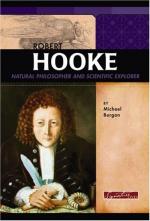
    Robert Hooke
    One of the preeminent scientists of the seventeenth century, Robert Hooke is perhaps best remembere... more

    Robert Hooke
    One of the preeminent scientists of the seventeenth century, Robert Hooke is perhaps best remembere... more


    Copyrights
    Robert Hooke from Encyclopedia of World Biography. ©2005-2006 Thomson Gale, a part of the Thomson Corporation. All rights reserved.

    Works by Author
    Join BookRagslearn moreJoin BookRags


    About BookRags | Customer Service | Report an Error | Terms of Use | Privacy Policy

