Forgot your password?  

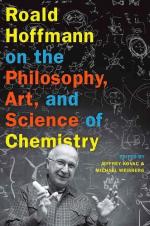
Roald Hoffmann | Biography

This Biography consists of approximately 4 pages of information about the life of Roald Hoffmann.
This section contains 1,079 words
(approx. 4 pages at 300 words per page)

World of Scientific Discovery on Roald Hoffmann

Roald Hoffmann was born Roald Safran on July 18, 1937, in Zloczów, Poland on the eve of World War II. His father was Hillel Safran, a civil engineer; his mother, Clara Rosen, was a schoolteacher. In 1941 German troops occupied Zloczów, and the family was sent first to a Jewish ghetto and then interred at a labor camp. Safran managed to arrange for his wife and son to escape the camp, and the two were hidden by a Ukrainian teacher. Hoffmann's father made plans to follow them, but his escape was discovered by the Nazis and he was executed. Hoffmann and his mother were able to remain undetected until 1944, when the Red Army liberated Zloczów, which later became part of Soviet Ukraine. The two moved to Kraków, Poland, where his mother met and married Paul Hoffmann, whose spouse had also been killed in the war. They lived in several camps for displaced persons in Austria and Germany. The Hoffmanns were able to emigrate to the United States in 1949, and they settled in New York City.

Hoffmann learned English and attended public schools in Brooklyn, including Stuyvesant High School, which specialized in science. His mother wanted him to become a doctor, and he enrolled at Columbia University with this in mind. He spent most of his summers studying the chemistry of cement and hydrocarbons at the National Bureau of Standards, and it was here his interest in chemistry really began. In 1958, after only three years, he graduated summa cum laude in chemistry, and then entered the doctoral program at Harvard University.

In 1959 Hoffmann was awarded a summer fellowship to attend a program in quantum chemistry at the University of Uppsala in Sweden. That same year he attended a summer symposium on quantum physics in Sweden and met Eva Börjesson. He married her in 1960, and the couple now has two children. He studied at Moscow University in the Soviet Union. After returning from Moscow in 1960, he began his doctoral work, studying under William Nunn Lipscomb, Jr. Hoffmann researched theoretical chemistry for his Ph.D. He examined questions relating to the electronic structure of certain organic molecules. He used computer programs to determine the electronic structure of boron hydrides and other polyhedral molecules and also to predict what shape these molecules would assume after a reaction. Hoffmann's work advanced the application of what is called the Hückel method, which is used to calculate the number of electrons electrons in orbit around a molecule.

Hoffmann received his Ph.D. in chemical physics in 1962, and he remained at Harvard on a three-year fellowship from the Society of Fellows. This fellowship offered Hoffmann the time to shift the focus of his research away from purely theoretical to applied theoretical chemistry. In 1964 he began working with organic chemist Robert B. Woodward, who had observed an unusual and unexpected reaction during an attempt to synthesize vitamin B 12. Hoffmann left Harvard in 1965 to accept a position as associate professor at Cornell University, but he continued his collaboration with Woodward.

The reaction Woodward had observed was one of a class which is now called pericyclic reactions, whose course was very difficult to predict. Hoffmann and Woodward initially began to formulate their rules in an effort to identify the conditions that would produce certain results, and one of the difficulties they faced in this effort was the complexity of predicting how energy was released during these reactions. The release of energy during a reaction is determined by changes in the motion of electrons known as orbitals. What Hoffmann discovered was that the course of the reaction depended on the symmetry of these orbitals. Hoffmann and Woodward examined how orbital symmetry determined different reactions, and using quantum mechanics they were able to develop a mathematical procedure to predict these symmetries and thus whether certain combinations of chemicals would result in reactions.

The result of their work was a clear and relatively simple method of prediction that was based on diagrams. The Woodward-Hoffmann rules are now widely used, and they have had important practical applications in medical and industrial research. When Hoffmann was awarded the Nobel Prize in chemistry in 1981, Woodward had already died, but Hoffmann mentioned him frequently in his Nobel lecture and believed they would have shared the prize had he lived.

During the course of his work with Woodward, Hoffmann became convinced that similarities in the structure and function of electrons bridged many of the traditional divisions in chemistry, particularly the distinction between organic and inorganic chemistry. Following the formulation and publication of their rules, Hoffmann began conducting research to show that their method of predicting orbital symmetry could be applied to inorganic as well as organic compounds. Hoffmann and others working in his laboratory made detailed examinations of both inorganic and organometallic molecules--organic compounds which include metal. They were able to establish the unity of structure and function which he originally suspected, and his work has increased the ability of chemists to predict the course of inorganic reactions. The American Chemical Society presented Hoffmann with the Arthur C. Cope Award in Organic Chemistry in 1973, and the society named him as the recipient of their Inorganic Chemistry Award in 1982. He is the first American chemist to be honored in both disciplines.

Hoffmann has long been interested in the similarities between art and the creative process he believes is required in science. Inspired by memories of his undergraduate work with the literary critic Mark Van Doren at Columbia, and moved by the experience of reading the poems of Wallace Stevens, Hoffmann began writing poetry at the age of 40. He continues to work with a group of poets at Cornell, and he has published two volumes of his poems. He has also written a book with artist Vivian Torrence on the relationship between chemistry and art. Hoffmann published Chemistry Imagined: Reflections on Science. in 1993.

Hoffmann was made a full professor at Cornell in 1968, and in 1974 he was named the John A. Newman Professor of Physical Science at that university. He continues his research and work in the school's Chemistry Department, where he is currently the Frank H. T. Rhodes Professor of Humane Letters.

In addition to the Nobel Prize and his awards in organic and inorganic chemistry, Hoffmann received the Pauling Award in 1974, the Nichols Medal in 1981, and the Priestly Medal in 1990. He is a member of the National Academy of Sciences and a foreign member of the Royal Society in London.

This section contains 1,079 words
(approx. 4 pages at 300 words per page)
Copyrights
Roald Hoffmann from World of Scientific Discovery. ©2005-2006 Thomson Gale, a part of the Thomson Corporation. All rights reserved.
Follow Us on Facebook
Homework Help