Forgot your password?  

Ptolemy | Biography

This Biography consists of approximately 2 pages of information about the life of Ptolemy.
This section contains 468 words
(approx. 2 pages at 300 words per page)

World of Scientific Discovery on Ptolemy

Very little is known about Ptolemy's early life. Born in Alexandria, Egypt, as Ptolemais Hermii, his name was later latinized as Claudius Ptolemaeus, and later Ptolemy.

Ptolemy's chief contribution to science is a series of books in which he compiled the knowledge of the ancient Greeks, his primary source being Hipparchus (fl. Second Century b.c.). Because most of Hipparchus' writings have not survived from antiquity, many of the ideas he espoused about the universe have become known as the Ptolemaic system.

Ptolemy 's system placed the Earth directly at the center of the universe. The Sun, Moon and planets all orbited the Earth. However, since such a scheme did not match the observed motions of the planets, Ptolemy added small orbits to the planets called epicycles, and introduced other mathematical devices to make a better fit.

Despite its errors and complications, the Ptolemaic system was adequate enough to make predictions of planetary positions, and it influenced thinking for 1,400 years. It was not until 1543 that Nicholas Copernicus published his book refuting the Ptolemaic system. After Tycho Brahe 's exceptionally accurate measurements of the positions of the planets showed Ptolemy's system was inaccurate, it fell upon Johannes Kepler to devise a better explanation of planetary orbits.

Hipparchus had made a catalogue of stars, which were grouped into 48 constellations. Ptolemy placed them in his book and gave these patterns the names that are still in use today. He also included Hipparchus' work on trigonometry, his estimate of the distance between the Earth and the Moon, which was fairly accurate, as well as Aristarchus' (fl. Third Century b.c.) incorrect estimate of the Earth's distance from the Sun.

Ptolemy's book was entitled Mega (mathematike) syntaxis ("Great [mathematical] compilation") although Mega was sometimes replaced by Megiste ("Greatest"). When the Arabs adopted the work, they called it, ("The Greatest"), which it is known as today. It was translated into Latin in 1175 (as "Almagesti" or "Almagestum") and dominated European thinking for four centuries.

In the field of optics, Ptolemy wrote about the reflection and refraction of light. He lists tables for the refraction of light as it passes into water at different angles. Another book, Tetrabiblos, is a serious treatment of astrology.

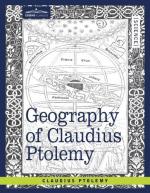
Ptolemy also wrote a treatise that dealt with geography and included maps as well as tables of latitude and longitude. It explained how those lines could be mathematically determined, but only a few latitudes were calculated. He had accepted Poseidonius' (c. 135-51 b.c.) erroneously small estimate of the size of the Earth, instead of Eratosthenes' (c. 276-194 b.c.) more accurate figure, and Ptolemy unwittingly may have altered the history of the world. After his geography had been translated into Latin, it eventually came to the attention of Christopher Columbus (1451-1506), who accepted the incorrect size and concluded that his search for a short-cut to Asia was possible.

This section contains 468 words
(approx. 2 pages at 300 words per page)
Copyrights
Ptolemy from World of Scientific Discovery. ©2005-2006 Thomson Gale, a part of the Thomson Corporation. All rights reserved.
Follow Us on Facebook
Homework Help