
BookRags.com Literature Guides Literature
Guides
Criticism & Essays Criticism &
Essays
Questions & Answers Questions &
Answers
Lesson Plans Lesson
Plans
My Bibliography Periodic Table U.S. Presidents Shakespeare Sonnet Shake-Up
Research Anything:        
History | Encyclopedias | Films | News | Create a Bibliography | More... Login | Register | Help

Not What You Meant?  There are 33 definitions for Lombard.

Peter Lombard Biography

Print-Friendly  Order the PDF version  Order the RTF version
About 2 pages (606 words)
Peter Lombard Summary

Bookmark and Share Questions on this topic? Just ask!
Name: Peter Lombard
Birth Date: c. 1095
Death Date: August 21, 1160
Place of Birth: Lumellogno, Italy
Place of Death: Paris, France
Nationality: Italian
Gender: Male
Occupations: theologian

Encyclopedia of World Biography on Peter Lombard

The Italian theologian Peter Lombard (ca. 1095-1160) wrote "The Sentences," a work that became the standard textbook on theology in European universities for 400 years.

Peter Lombard was born at Lumellogno in the region of Novara in northern Italy. After a period of study at Bologna or Vercelli, he crossed the Alps to France in 1134 and went to Reims to study under a fellow countryman, Lutolph of Novara, who held a prominent position in the cathedral school at Reims. Lutolph had previously been a student of Anselm of Laon, and in his teaching he continued the exegetical traditions of the school of Laon, which concentrated on the interpretation of Scripture through the sayings of the Church Fathers.

After studying under Lutolph for 2 or 3 years, Lombard moved to Paris, where he may have attended at SteGeneviève the lectures of Peter Abelard, a long-standing enemy of Lutolph. During the next 5 years Lombard wrote his commentaries on the Psalms and on the Letters of St. Paul, both of which were soon used in the schools. About 1140 Lombard received his license to teach and he probably remained in Paris, where in 1144 he became a canon of the Cathedral of Notre Dame.

Lombard's reputation as a theologian grew rapidly, and he seems to have developed a friendship with Bernard of Clairvaux. At the Council of Reims in 1148, Pope Eugenius III named Lombard to a commission to study the writings of the leading theologian of the school of Chartres, Gilbert de la Porrée, who was then the bishop of Poitiers. Although Lombard seems to have favored a condemnation, one was not forthcoming, and he continued in his writings the struggle against what he considered suspicious doctrine. Following a journey to Rome in 1153 and the reward of a prebend at Beauvais, he continued his teaching at Paris, where, before 1156, he became the archdeacon of the Cathedral.

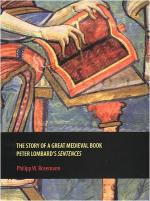
Lombard's greatest theological work, The Sentences, was completed in 1157 or 1158. It not only was a summary of Christian doctrine but was critical of positions taken by Gilbert de la Porrée. The work is a compilation of the sayings of the Fathers, especially of St. Augustine, on the major aspects of Christian dogma. However, it is not a mere collection of authorities but an attempt to group the most important theological statements from the sources around particular problems. Lombard made an effort to harmonize seemingly conflicting statements and constructed the outlines of a solution. But the solutions offered were not of a kind to end discussion but rather to stimulate it and to channel it within orthodox and, hopefully, fruitful lines. The form of Lombard's work was not unique but was based on De fide orthodoxa of St. John of Damascus and the Sentences of St. Isidore of Seville, and it was similar to Gratian's Decretum.

The content of Lombard's Sentences covers most of Christian theology, moving from the nature of God and the Trinity at the beginning, through the doctrine of creation and Christology, to the Church, the Sacraments, and the Final Judgment. The theological bias is Augustinian, and Lombard was particularly concerned with the question of man's salvation and the nature of the moral act. He tried to maintain a strong concept of the freedom of man while stressing the omnipotence of God and the absolute need for grace.

Within 2 years after its completion, students were writing commentaries on the Sentences, and the work was made a major theological source by the Fourth Lateran Council in 1215. In 1159, after the death of Bishop Thibault, Lombard was elected bishop of Paris. He died there the following year on August 21.

This is the complete article, containing 606 words (approx. 2 pages at 300 words per page).

View More Summaries on Peter Lombard
More Information
  • View Peter Lombard Study Pack
  • 33 Alternative Definitions
  • Search Results for "Peter Lombard"
  • Add This to Your Bibliography
  • More Products on This Subject
    Peter Lombard
    (born &circa; 1100, Novara, Lombardy—died Aug. 21/22, 1160, Paris) French bishop and theologi... more

    Peter Lombard
    PETER LOMBARD (c. 1100–1160), also known as Peter the Lombard, was a Christian theologian an... more


    Ask any question on Peter Lombard and get it answered FAST!
    Answer questions in BookRags Q&A and earn points toward
    discounted or even FREE Study Guides and other BookRags products!
    Learn more about BookRags Q&A
    Copyrights
    Peter Lombard from Encyclopedia of World Biography. ©2005-2006 Thomson Gale, a part of the Thomson Corporation. All rights reserved.

    Join BookRagslearn moreJoin BookRags


    About BookRags | Customer Service | Report an Error | Terms of Use | Privacy Policy

