 Print
Print Word
Word PDF
PDF|
This section contains 2,085 words (approx. 7 pages at 300 words per page) |

|
Authors and Artists for Young Adults on Niccol Machiavelli
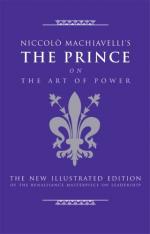
Best known for his works The Prince and The Art of War, fifteenth-century Italian statesman Niccolò Machiavelli remains influential centuries after his death as the first writer to break with the tradition of Aristotle and disentangle the art of politics from an ethical code based on an idealized vision of human nature. Grounded in Renaissance humanism, with its Greek and Roman foundations, Machiavelli's works reflect the spirit of the age in their anticlericalism and their rejection of God as the guiding force behind human events. Perhaps best summarized in the statement "the ends justify the means," Machiavelli's political philosophy shocked his contemporaries and cast him into the role of intellectual arch-villain for several centuries.
The Age of Nation-States
While Machiavelli was born into an aristocratic Florentine family, his family's social standing was not matched by financial wealth. Although the events of his childhood remain shrouded in mystery...
|
This section contains 2,085 words (approx. 7 pages at 300 words per page) |
|