
 Print
Print Word
Word PDF
PDF|
This section contains 4,879 words (approx. 17 pages at 300 words per page) |

|
Dictionary of Literary Biography on Natalia Ginzburg
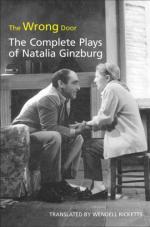
The larger share of Natalia Ginzburg's life was divided between Turin and Rome, the two cities that are associated with most of her works. Turin, where she spent her youth, became a valuable source of past memories; the eternal city of Rome, home for the rest of her life, served as a setting for many of her novels as well as her dramatic works. It is in Rome that her characters develop into emblematic figures of estrangement, troubled creatures alienated from self, family, and society. The most difficult years in Ginzburg's life were 1940 through 1943, the transitional years between the two cities when she accompanied her husband to a remote village in the southern region of Abruzzi. Many of her works carry the imprint of this painful experience.
Ginzburg was born in Palermo in an upper middle-class family, the youngest of five children. Her father, Giuseppe Levi, a professor...
|
This section contains 4,879 words (approx. 17 pages at 300 words per page) |
|



