
BookRags.com Literature Guides Literature
Guides
Criticism & Essays Criticism &
Essays
Questions & Answers Questions &
Answers
Lesson Plans Lesson
Plans
My Bibliography Periodic Table U.S. Presidents Shakespeare Sonnet Shake-Up
Research Anything:        
History | Encyclopedias | Films | News | Create a Bibliography | More... Login | Register | Help


Milan Kundera Biography

Print-Friendly  Order the PDF version  Order the RTF version
About 3 pages (1,019 words)
Milan Kundera Summary

Bookmark and Share Know this topic well? Help others and get FREE products!
Name: Milan Kundera
Birth Date: April 1, 1929
Place of Birth: Brno, Czechoslovakia
Nationality: Czech
Gender: Male
Occupations: author

Encyclopedia of World Biography on Milan Kundera

In his novels, the Czech-born author Milan Kundera (born 1929) sought to discover the answer to the question: What is the nature of existence"

Milan Kundera was one of the most important and talented novelists to emerge from the death throes of the old Communist regimes in Eastern Europe. However, his novels are not merely political tracts but attempts to discover possible meanings for the existential problems facing all human beings.

Born on April 1, 1929, in Brno, Czechoslovakia (now Czech Republic), Kundera was the son of a pianist and musicologist named Ludvik and his wife, Milada (Janiskova). On September 30, 1967, he married Vera Hrabankova.

Kundera was educated in music under the direction of Paul Haas and Vaclav Kapral. Later he also attended Charles University and, in 1956, studied at the Academy of Music and Dramatic Arts, both of which are in Prague. In 1958 he joined the Film Faculty of the latter school, a position he held until 1969.

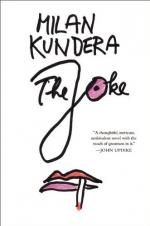
Originally a poet, Kundera published three volumes of his work between 1953 and 1964. It was then that he began writing in the form in which he was the most successful: the novel. His first book, The Joke, was published in 1967. This novel exposes the dangers of living in a humorless world and is the work most responsible for Kundera's emergence as a leader in the reform movement that led to the Czech Republic's 1968 Prague Spring. During this time of cultural reform, a new freedom to writers and other artists was allowed in what was then a communist country. However, the reprieve from oppression was short lived (ended by Soviet tanks occupying the city), and Kundera found himself in the same position as many of the other leaders of the reform movement. His books disappeared from the shelves of libraries and bookstores and he lost his job at the academy and his right to continue writing and publishing in his native country. His first two novels were published in translation abroad, but Kundera was essentially a writer without an audience, or at least one with whom he could be comfortable. Although not initially allowed to travel to the West, Kundera finally was able to accept a teaching position in France.

At the Université de Rennes he served as an invited professor of comparative literature from 1975 through 1979. In 1980 he accepted the position of professor at the École des hautes études en sciences sociales in Paris. The following year he became a naturalized citizen of France.

Life Is Elsewhere, his first major work after his exile, was published in the United States in 1974. It deals with revolutionary romanticism and with lyrical poetry as a whole, exploring, among other things, the volatility of the marriage of the two. His next book was also published in the United States and was entitled The Farewell Party. This 1976 release satirizes a government-run health spa for women with fertility problems while simultaneously addressing serious, ethical questions. The Book of Laughter and Forgetting was first published in the United States in 1980 and then was republished with an interview the author gave to American novelist Philip Roth in 1981. This book illustrates the need for memory to overcome forgetting in order for an individual to achieve self-preservation.

In 1984 Milan Kundera's most famous novel was published. The Unbearable Lightness of Being delves into the greatest existential problems that people are faced with: love, death, transcendence, the sense of continuity or "heaviness" that is provided by memory, and the contrasting sense of "lightness" that is brought about by forgetting. The book was turned into a movie in 1988.

A later publication entitled Immortality was released in 1991 in England. In addition to the title subject, the book also treats the subjects of the Romantic era, ideology, the cult of images, and selfish individualism. A recent novel, Slowness, was published in 1994 and concerns many of these same themes. Identity, published in 1998, is a suspenseful story of the "the anxieties of love and separateness," according to review in the Boston Globe.

Kundera's most important work, outside of his novels, is his nonfiction work, The Art of the Novel. Published in 1988, the book outlines his theories of the novel, both personal and European. True to the nature of his own novels, this book does not consist of one long essay but of three short essays, two interviews, a list of 63 words and their definitions, and the text of a speech.

Novelistic unity for Kundera does not exist in a predetermined set of rules. He uses a common theme and a structure based on musical polyphony to tie the sections of his novels together. The lengths and arrangements of chapters, subchapters, and sections are used to create mood and a sense of time, much like in a musical composition. Instead of following the linear story of a character or set of characters, Kundera connects sometimes seemingly unconnectable stories through their related themes and existential situations.

In The Art of the Novel Kundera explains how the history of the novel and the history of European culture are inextricably bound together. Starting with Cervantes and passing through the works of authors such as Richardson, Balzac, Flaubert, Tolstoy, Proust, Joyce, Mann, and Kafka, he traces the route of the experience of existence. This route starts from a world of unlimited potential, moves to the beginning of history, the shrinking of possibilities in the outside world, the search for infinity in the human soul, the futility of this search, and into the realm where history is seen as a monster that can offer nothing helpful.

In 1995, Kundera published a book-length essay of literary criticism, Testaments Betrayed, which is organized after Nietzsche's books, with each of its nine parts divided into small sections. Its main, recurring theme focuses on Kundera's firm belief that writers and other artists' prerogatives should be defended and their intentions respected by editors, publicists, and executors.

Milan Kundera's contributions, both as a novelist exploring the nature of existence and as historian and critic of the novel, point out his importance as a writer, for his wisdom as well as for his creative genius.

This is the complete article, containing 1,019 words (approx. 3 pages at 300 words per page).

View More Summaries on Milan Kundera
More Information
  • View Milan Kundera Study Pack
  • Search Results for "Milan Kundera"
  • Add This to Your Bibliography
  • More Products on This Subject
    Milan Kundera
    Milan Kundera is one of the few Czech writers who have achieved wide international recognition. In ... more

    Milan Kundera
    Milan Kundera was born in Brno, Czechoslovakia in 1929. "I was born on the first of April. That has... more


    Ask any question on Milan Kundera and get it answered FAST!
    Answer questions in BookRags Q&A and earn points toward
    discounted or even FREE Study Guides and other BookRags products!
    Learn more about BookRags Q&A
    Copyrights
    Milan Kundera from Encyclopedia of World Biography. ©2005-2006 Thomson Gale, a part of the Thomson Corporation. All rights reserved.


    Join BookRagslearn moreJoin BookRags


    About BookRags | Customer Service | Report an Error | Terms of Use | Privacy Policy

