
 Print
Print Word
Word PDF
PDF|
This section contains 1,980 words (approx. 7 pages at 300 words per page) |

|
Encyclopedia of World Biography on Mikhail Mikhailovich Bakhtin
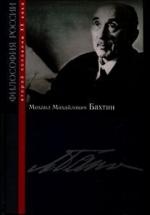
Russian philosopher and literary critic Mikhail Mikhailovich Bakhtin (1895-1975) was the central figure of an intellectual circle that focused on the social nature of language, literature, and meaning in the years between World War I and World War II. Though his major works were not widely read until after the 1960s, his ideas were later adopted by many academic spheres and have contributed to new directions in philosophy, linguistics, and literary theory.
Although relatively unknown outside Soviet intellectual circles during his lifetime, the writings of Mikhail Mikhailovich Bakhtin have a had a significant influence in the fields of literary theory, linguistics, and philosophy. In works such as Problems of Dostoevsky's Poetics (1929, 1963), Rabelais and His World (1965), and The Dialogic Imagination (1975), Bakhtin outlined theories on the social nature of language, literature, and meaning. With the spread of his ideas in the Western academic world, Bakhtin has become one of the...
|
This section contains 1,980 words (approx. 7 pages at 300 words per page) |
|



