
 Print
Print Word
Word PDF
PDF|
This section contains 4,748 words (approx. 16 pages at 300 words per page) |

|
Dictionary of Literary Biography on Mikhail Mikhailovich Bakhtin
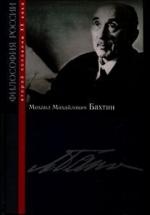
Before he attained posthumous fame as a polymath, Mikhail Mikhailovich Bakhtin's reputation in the U.S.S.R. lay under the shadow of his 1929 arrest for being a member of Voskresenie (Resurrection), described by Michael Holquist in his introduction to Art and Answerability: Early Philosophical Essays (1990) as "an organization of intellectuals who sought to synthesize the principles of Christianity and Marxism." Prominent in his pre-arrest writings are religious concepts, principally agape, or unpossessive love, a Christian's accepting the separateness and individuality of a loved one. He argued, for instance, that novels should not be narcissistic extensions of their authors but should respect and cherish many "voices" in complex "dialogue." After that arrest he left discretely tacit the fact that what came to be called his "dialogism" (unpossessive, loving communication) derived from the Christian understanding of unpossessive love (agape). Ironically, the Stalinist restraints that kept him from greater candor...
|
This section contains 4,748 words (approx. 16 pages at 300 words per page) |
|



