 Print
Print Word
Word PDF
PDF|
This section contains 4,111 words (approx. 14 pages at 300 words per page) |

|
Authors and Artists for Young Adults on Mel Brooks
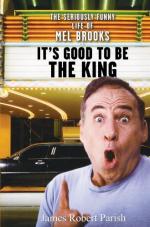
"Humor is just another defense against the universe," Mel Brooks once observed. Screenwriter, director, actor, producer, comedian and occasional Two-Thousand-Year-Old Man: no one title is encompassing enough to capture--let alone tame--Brooks. He is like a comedic force of nature, whose brash, blunt, and gleefully irreverent style has delighted, repulsed, and entertained audiences since his early work on television during the 1950s. In a profile for Saturday Review, Brooks said: "My job as a humorist . . . is to take the audience and get it to look at something from the side instead of straight on. There are no schools for comic filmmakers. You're on your own and you must hope that what strikes you as funny also strikes a lot of others. The script is the raft you float on."
Among the "rafts" Brooks has written and directed are the movies The Producers, Blazing Saddles, and Young Frankenstein. His satiric...
|
This section contains 4,111 words (approx. 14 pages at 300 words per page) |
|