BookRags.com Literature Guides Literature
Guides
Criticism & Essays Criticism &
Essays
Questions & Answers Questions &
Answers
Lesson Plans Lesson
Plans
My Bibliography Periodic Table U.S. Presidents Shakespeare Sonnet Shake-Up
Research Anything:        
History | Encyclopedias | Films | News | Create a Bibliography | More... Login | Register | Help

Not What You Meant?  There are 7 definitions for Minsky.

Marvin Minsky Biography

Print-Friendly  Order the PDF version  Order the RTF version
About 4 pages (1,058 words)
Marvin Minsky Summary

Bookmark and Share Know this topic well? Help others and get FREE products!

World of Computer Science on Marvin Minsky

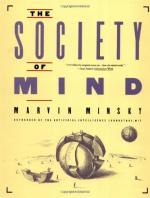
Marvin Lee Minsky is an educator and computer scholar at Massachusetts Institute of Technology and a pioneer in the field of artificial intelligence. Since the early 1950s, he has attempted to define and explain the thinking process and design a machine that can duplicate it. His 1987 book, The Society of Mind, put forward a detailed and mechanistic theory of how the mind works, and how it might be artificially duplicated. For his original and outstanding achievements in science and technology, Minsky was awarded the Japan Prize in 1990. Marvin Lee Minsky was born in New York City on August 9, 1927, to Dr. Henry Minsky and Fannie Reiser. His father was an eye surgeon and an artist. His mother was active in the Zionist movement. For the most part, Minsky attended private schools during his childhood, where his intelligence and later his interest in electronics and chemistry were nurtured. He learned early that he was most comfortable in the intellectually stimulating world of academia. This perception was enhanced in 1945, when, following his high school graduation, he enlisted in the United States Navy. He took his basic training at the Great Lakes Naval Training Center north of Chicago, with about one hundred and twenty other recruits. He later told Jeremy Bernstein, an interviewer for the New Yorker, that "they provided my first, and essentially my last, contact with nonacademic people."

Minsky enrolled at Harvard University in 1946, majoring in physics, but his eclectic interests kept him attending classes in a wide variety of subjects, including genetics, mathematics, and the nature of intelligence. He associated briefly with the researchers in the psychology department, but questioned the prevailing theories of what happens deep inside the mind. He confided to Bernstein in a New Yorker interview that he found B. F. Skinner's theories unacceptable "because they were an attempt to fit curves to behavior without any internal ideas." Skinner had enjoyed considerable success in conditioning animal behavior using these hypotheses, but Minsky felt there must be a better explanation. Minsky switched his major to mathematics in his senior year, and graduated in 1950.

From Harvard, Minsky moved to Princeton to begin his doctoral studies. In the same environment in which mathematician Alan Turing had constructed the first electrical multiplier just prior to World War II, Minsky applied his budding theories of mentation to the construction of a learning machine which he called the Snarc, whose purpose was to learn how to traverse a maze using forty "agent" components and a system to reward success. However, Minsky's accomplishments with the Snarc were limited; although he felt himself on the right track with the "reward" principle, it was not versatile enough for Minsky's purposes.

Minsky began to explore how a machine might use memory to use past experience. This thought is elaborated on in his doctoral dissertation, in which he tries to show ways that a learning machine can predict the results of its behavior, based on its knowledge of past actions. There was some question at the time whether this line of inquiry properly belonged in a program that was ostensibly about mathematics. This is a recurring problem for Minsky, whose interests typically draw from so many disciplines that it becomes difficult to determine exactly what to label them. After receiving his Ph.D., Minsky accepted a three-year junior fellowship at Harvard, where, as he later said, he had no obligations except to pursue his theories about intelligence.

In 1958 Minsky joined the staff at the Massachusetts Institute of Technology's Lincoln Laboratory. He became an assistant professor of mathematics, and, in 1959, he and a colleague, John McCarthy, founded the MIT Artificial Intelligence Project. This project eventually became the Artificial Intelligence Laboratory, of which Minsky was the director from 1964 until 1973. In 1974, he was promoted to Donner professor of science in the department of electrical engineering and computer science. In 1989, he moved to MIT's media laboratory, where he became Toshiba Professor of Media Arts and Sciences.

Minsky has made it his life's work to finalize an overall theory of how minds work. He has disturbed, and perhaps alienated, many of his co-researchers by insisting that what we think of as "consciousness" or "self-awareness" is actually a myth--a convenient fallacy which allows us to function as a society. According to Minsky's theory (which he has outlined in The Society of Mind as well as in numerous articles in popular magazines), there is no difference between humans and machines, because, he believes, humans are machines whose brains are made up of many semi-autonomous but unintelligent "agents," but who mistakenly consider themselves intelligent individuals. According to Eugene F. Mallove in a Tech Talk article, "it is Minsky's view that hundreds of specialized 'computers' make up the human brain--or any other large brain for that matter. Many of these are at work cooperatively and unconsciously." Some have expressed concern that Minsky's mechanistic view of how minds work flies in the face of much established knowledge in the fields of biology and psychology, and contradicts what we seem to perceive about ourselves. But Minsky dismisses such objections, maintaining that most research on how the mind works has been crippled by researchers who simply ask the wrong questions.

Although Minsky still holds a professorship at the Artificial Intelligence Laboratory, most of the recent activity there has gone in directions that do not fully support his theories. For the past few years, Minsky has devoted himself to private research, fleshing out his Society of Mind theory. His professional writings are not prolific, but he writes often in such publications as Omni and Discover, and has co-authored a science fiction novel (not surprisingly based on his theory) with Harry Harrison titled The Turing Option. Artificial intelligence itself is a field in stasis; no major steps toward developing--or even defining--a truly intelligent machine have been made in decades. Minsky believes this could change if more researchers would pay attention to his theory. Whether or not that turns out to be true, it is very likely that when the field of artificial intelligence does move forward, Minsky will be somewhere nearby, giving it a push.

Minsky married Gloria Rudisch, a doctor, in 1953. The couple has three children: Margaret, Henry, and Juliana. Minsky has won many honors for his pioneering work: the Donner professorship, the Turing award in 1970, and the prestigious Japan award in 1990.

This is the complete article, containing 1,058 words (approx. 4 pages at 300 words per page).

View More Summaries on Marvin Minsky
More Information
  • View Marvin Minsky Study Pack
  • 7 Alternative Definitions
  • Search Results for "Marvin Minsky"
  • Add This to Your Bibliography
  • More Products on This Subject
    Minsky, Marvin (Lee)
    (born Aug. 9, 1927, New York, N.Y., U.S.) U.S. computer scientist. He received a Ph.D. from Princet... more

    When Will Machines See What We See?
    Can a machine see?   Does it need to see?  Is machine vision similar to human vision? &nbs... more


    Ask any question on Marvin Minsky and get it answered FAST!
    Answer questions in BookRags Q&A and earn points toward
    discounted or even FREE Study Guides and other BookRags products!
    Learn more about BookRags Q&A
    Copyrights
    Marvin Minsky from World of Computer Science. ©2005-2006 Thomson Gale, a part of the Thomson Corporation. All rights reserved.

    Join BookRagslearn moreJoin BookRags


    About BookRags | Customer Service | Report an Error | Terms of Use | Privacy Policy