
 Print
Print Word
Word PDF
PDF|
This section contains 1,915 words (approx. 7 pages at 300 words per page) |

|
Encyclopedia of World Biography on Marcus Tullius Cicero
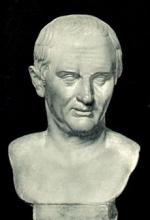
Marcus Tullius Cicero (106-43 BC) was Rome's greatest orator and a prolific writer of verse, letters, and works on philosophy, politics, and rhetoric that greatly influenced European thought.
Cicero was born on Jan. 3, 106 BC, at Arpinum near Rome, the elder son of a wealthy landowner. At an early age Cicero saw military service during the Social War (90-89), but he managed to avoid involvement in the civil wars that followed. He wanted to follow a career in politics and decided first to gain a reputation as an advocate.
Cicero's first appearances in court were made during the dictatorship of Sulla (81-80). In one case, while defending Sextus Roscius of Ameria on a trumped-up charge of murder, he boldly made some outspoken comments on certain aspects of Sulla's regime, and in 79 he left Rome to study in Rhodes. By 76 Cicero was back in Rome, where he married Terentia, whose...
|
This section contains 1,915 words (approx. 7 pages at 300 words per page) |
|



