
 Print
Print Word
Word PDF
PDF|
This section contains 10,936 words (approx. 37 pages at 300 words per page) |

|
Dictionary of Literary Biography on Ludwig (Josef Johann) Wittgenstein
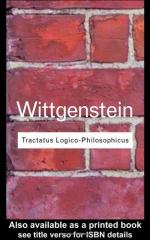
Ludwig Wittgenstein is regarded as one of the leading analytic philosophers of the twentieth century. He is usually credited with instigating not one revolution in philosophical method but two. Until recently it was common to divide his work into two distinct periods. According to this division, the early period culminated in the publication in 1921 of the Tractatus Logico-Philosophicus, which he completed during active service in World War I, while the later period culminated in the 1953 publication of the Philosophical Investigations, which he composed between 1936 and 1948. Each greatly influenced the subsequent direction of analytic philosophy. The primary influence of the Tractatus Logico-Philosophicus was initially on the development of logical positivism in Europe in the 1920s and 1930s and, following the immigration of many of the principal members of the Vienna Circle to the United States, on the development of pragmatism. Its influence in the United Kingdom was confined in...
|
This section contains 10,936 words (approx. 37 pages at 300 words per page) |
|



