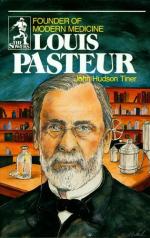
| Name: |
Louis Pasteur |
| Birth Date: |
|
| Death Date: |
|
| Place of Birth: |
|
| Place of Death: |
|
| Nationality: |
|
| Gender: |
|
| Occupations: |
|
Louis Pasteur left a legacy of scientific contributions that include an understanding of how microorganisms carry on the biochemical process of fermentation, the establishment of the causal relationship between microorganisms and disease, and the concept of destroying microorganisms to halt the transmission of communicable disease. These achievements led him to be called the founder of microbiology.
After his early education, Pasteur went to Paris to study at the Sorbonne, then began teaching chemistry while still a student. After being appointed chemistry professor at a new university in Lille, France, Pasteur began work on yeast cells and showed how they produce alcohol and carbon dioxide from sugar during the process of fermentation. Fermentation is a form of cellular respiration carried on by yeast cells, a way of getting energy for cells when there is no oxygen present. Pasteur found that fermentation would take place only when living yeast cells were present.
Establishing himself as a serious, hard-working chemist, Pasteur was called upon to tackle some of the problems plaguing the French beverage industry at the time. Of special concern was the spoiling of wine and beer, which caused great economic loss, and tarnished France's reputation for fine vintage wines. Vintners wanted to know the cause of l'amer, a condition that was destroying France's best burgundy wines. Pasteur looked at wine under the microscope and noticed that when aged properly, the liquid contained little spherical yeast cells. But when the wine turned sour, there was a proliferation of bacterial cells that produced lactic acid. Pasteur suggested that heating the wine gently at about 120° F (48.89° C) would kill the bacteria that produced lactic acid and let the wine age properly. Pasteur's book Etudes sur le Vin, published in 1866, was a testament to two of his great passions--the scientific method and his love of wine. It caused another French revolution--one in winemaking, as Pasteur suggested that greater cleanliness was need to eliminate bacteria and that this could be accomplished using heat. Some wine-makers were initially reticent to heat their wines, but the practice eventually saved the wine industry in France.
The idea of heating to kill microorganisms was applied to other perishable fluids, including milk, and the idea of pasteurization was born. Several decades later in the United States, the pasteurization of milk was championed by American bacteriologist Alice Catherine Evans, who linked bacteria in milk with the disease brucellosis, a type of fever found in different variations in many countries.
In his work with yeast, Pasteur also found that air should be kept from fermenting wine, but was necessary for the production of vinegar. In the presence of oxygen, yeasts and bacteria break down alcohol into acetic acid, or vinegar. Pasteur also informed the vinegar industry that adding more microorganisms to the fermenting mixture could increase vinegar production. Pasteur carried on many experiments with yeast. He showed that fermentation can take place without oxygen (anaerobic conditions), but that the process still involved living things such as yeast. He did several experiments to show (as Lazzaro Spallanzani had a century earlier) that living things do not arise spontaneously but rather come from other living things. To disprove the idea of spontaneous generation, Pasteur boiled meat extract and left it exposed to air in a flask with a long S-shaped neck. There was no decay observed because microorganisms from the air did not reach the extract. On the way to performing his experiment Pasteur had also invented what has come to be known as sterile technique, boiling or heating of instruments and food to prevent the proliferation of microorganisms.
In 1862, Pasteur was called upon to help solve a crisis in another ailing French industry. The silkworms that produced silk fabric were dying of an unknown disease. Armed with his microscope, Pasteur traveled to the south of France in 1865. Here Pasteur found the tiny parasites that were killing the silkworms and affecting their food, mulberry leaves. His solution seemed drastic at the time. He suggested destroying all the unhealthy worms and starting with new cultures. The solution worked, and soon French silk scarves were back in the marketplace.
Pasteur then turned his attention to human and animal diseases. He supposed for some time that microscopic organisms cause disease and that these tiny microorganisms could travel from person to person spreading the disease. Other scientists had expressed this thought before, but Pasteur had more experience using the microscope and identifying different kinds of microorganisms such as bacteria and fungi.
In 1868, Pasteur suffered a stroke and much of his work thereafter was carried out by his wife Marie Laurent Pasteur. After seeing what military hospitals were like during the Franco-Prussian War, Pasteur impressed upon physicians that they should boil and sterilize their instruments. This was still not common practice in the nineteenth century.
Pasteur developed techniques for culturing and examining several disease-causing bacteria. He identified Staphylococcus pyogenes bacteria in boils and Streptococcus pyogenes in puerperal fever. He also cultured the bacteria that cause cholera. Once when injecting healthy chickens with cholera bacteria, he expected the chickens to become sick. Unknown to Pasteur, the bacteria were old and no longer virulent. The chickens failed to get the disease, but instead they received immunity against cholera. Thus, Pasteur discovered that weakened microbes make a good vaccine by imparting immunity without actually producing the disease.
Pasteur then began work on a vaccine for anthrax, a disease that killed many animals and infected people who contracted it from their sheep and thus was known as "wool sorters' disease." Anthrax causes sudden chills, high fever, pain, and can affect the brain. Pasteur experimented with weakening or attenuating the bacteria that cause anthrax, and in 1881 produced a vaccine that successfully prevented the deadly disease.
Pasteur's last great scientific achievement was developing a successful treatment for rabies, a deadly disease contracted from bites by an infected, rabid animal. Rabies, or hydrophobia, first causes pain in the throat that prevents swallowing, then brings on spasms, fever, and finally death. Pasteur knew that rabies took weeks or even months to become active. He hypothesized that if people were given an injection of a vaccine after being bitten, it could prevent the disease from manifesting. After methodically producing a rabies vaccine from the spinal fluid of infected rabbits, Pasteur sought to test it. In 1885, nine-year-old Joseph Meister, who had been bitten by a rabid dog, was brought to Pasteur, and after a series of shots of the new rabies vaccine, the boy did not develop any of the deadly symptoms of rabies.
To treat cases of rabies, the Pasteur Institute was established in 1888 with monetary donations from all over the world. It later became one of the most prestigious biological research institutions in the world. When Pasteur died in 1895, he was well recognized for his outstanding achievements in science.
This is the complete article, containing 1,130 words
(approx. 4 pages at 300 words per page).
View More Summaries on Louis Pasteur