
 Print
Print Word
Word PDF
PDF|
This section contains 8,760 words (approx. 30 pages at 300 words per page) |

|
Dictionary of Literary Biography on Kenneth Grahame
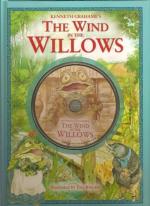
For more than eighty years, Kenneth Grahame's works have been among the most widely read of English children's writers. In his 1959 biography of Grahame, Peter Green reports that The Wind in the Willows (1908) had gone into more than one hundred editions and had enjoyed an annual sale of about eighty thousand copies. The book has been dramatized for both the stage and motion pictures, including two separate animated versions in 1983. Its enduring popularity confirms A. A. Milne's claim, in his introduction to a 1940 edition, that The Wind in the Willows is "a Household Book; a book which everybody in the household loves, and quotes continually, a book which is read aloud to every new guest and is regarded as the touchstone of his worth." Milne's rather complacent assertion, however, passes off as universal what is probably a rather more limited appeal. The "household" of which he speaks is...
|
This section contains 8,760 words (approx. 30 pages at 300 words per page) |
|



