 Print
Print Word
Word PDF
PDF|
This section contains 5,305 words (approx. 18 pages at 300 words per page) |

|
Authors and Artists for Young Adults on Ken Kesey
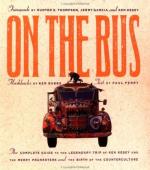
Writer Ken Kesey has often said that he would rather live a novel than write one--be a lightning rod rather than a seismograph. A lightning rod is exactly what Kesey has been, attracting not only the admiration of the literary establishment with his early novel, One Flew Over the Cuckoo's Nest, but also the crackle and spark of a younger generation with his experiments with LSD and antics with the Merry Pranksters. "Kesey is a pivotal figure between the Beats and the Hippies," noted Ann Charters in Dictionary of Literary Biography, "the leader and chief chronicler of the activities of his associates, the Merry Pranksters." Along with Neal Cassady, of Jack Kerouac fame, Kesey helped to pioneer the psychedelic drug culture with its mixed-media "happenings," and in the doing became as much a folk hero for the hippie generation as Cassady had become for the Beats.
A down-home...
|
This section contains 5,305 words (approx. 18 pages at 300 words per page) |
|