
BookRags.com Literature Guides Literature
Guides
Criticism & Essays Criticism &
Essays
Questions & Answers Questions &
Answers
Lesson Plans Lesson
Plans
My Bibliography Periodic Table U.S. Presidents Shakespeare Sonnet Shake-Up
Research Anything:        
History | Encyclopedias | Films | News | Create a Bibliography | More... Login | Register | Help

Search "Juan de Herrera"

Biographies Navigation
 

Juan de Herrera Biography

Print-Friendly  Order the PDF version  Order the RTF version
About 2 pages (514 words)
Juan de Herrera Summary

Bookmark and Share Questions on this topic? Just ask!
Name: Juan de Herrera
Birth Date: c. 1530
Death Date: January 15, 1597
Place of Birth: Mobellán, Spain
Place of Death: Madrid, Spain
Nationality: Spanish
Gender: Male
Occupations: architect

Encyclopedia of World Biography on Juan de Herrera

The Spanish architect Juan de Herrera (ca. 1530-1597) helped to plan the Escorial and introduced there a style that influenced Spanish architecture for over a century.

Juan de Herrera was born in Mobellán, Santander Province. He completed his studies at the University of Valladolid in the spring of 1548. The following October he joined Prince Philip (later Philip II) for a 3-year tour of Italy, Germany, and the Netherlands. He returned to Italy in 1553 in the service of Emperor Charles V and subsequently fought in the campaign of Flanders.

Herrera called his service to the monarch his "highest ideal." Not surprisingly, then, he followed Charles V into retirement in a monastery in Yuste, Estremadura region, and remained until the Emperor's death in 1558. Thereafter Herrera entered the service of Philip II. Herrera declared that, from 1565 onward, he made it a point "to follow His Majesty constantly wherever he might go." He also considered it to be his obligation to dress elegantly and to spend "excessively" in the best places as a living proof of "so great a prince."

One evidence of Herrera's ambition to be the very model of a multitalented Renaissance man is his geometrical illustrations for an abridgment (1562) of Alphonse the Wise's book on astronomy. Herrera also applied his knowledge of mathematics to the invention of navigational instruments that have been said to have increased the accuracy of nautical calculations.

In 1563 Philip II appointed Herrera to assist Juan Bautista de Toledo, the court architect, in the plans and construction of the Escorial (1561-1584), which the monarch described as "a palace for God and a little house for me." Some authorities insist that Herrera's real contribution to the Escorial design and construction did not begin until 1572, 5 years after Toledo's death. Letters between Philip II and Pedro de Hoyo in 1564, however, indicate that Herrera was playing an important role even then.

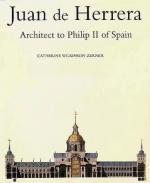
The Escorial is a complex of monastery, church, royal mausoleum, and palace. The site chosen was near the Guadarrama Mountains in the little town of El Escorial. All controversy over the extent of Herrera's contribution aside, the completed monument was the introduction of a style known traditionally as Herreran. The style is austere, symmetrical, and majestic, influenced by an Italianate, classicistic mannerism. Yet it is unique: its majesty is unforced; its formality is polyphonically muted; and its severity is a sovereign simplicity. Like the Gregorian chant, it is a paradox, simultaneously solemn and profoundly intimate.

Later works by Herrera, such as the Alcázar of Toledo (1571-1585) and the Palace of Aranjuez (ca. 1564-1586; finished in the 18th century), justify his fame. Among his disciples were Jorge Manuel Theotocopuli, the son of El Greco; and Francisco de Mora and his nephew Juan Gómez de Mora. Owing to what has been called the metaphysics of Herrera's principles, his style has been largely inimitable.

Herrera fell seriously ill in 1584 and was obliged to rely heavily upon the assistance of his pupils, particularly Francisco de Mora. He died on Jan. 15, 1597, in Madrid. He had married twice and was survived by his only child, Lorenzo.

This is the complete article, containing 514 words (approx. 2 pages at 300 words per page).

View More Summaries on Juan de Herrera
More Information
  • View Juan de Herrera Study Pack
  • Search Results for "Juan de Herrera"
  • Add This to Your Bibliography
  • More Products on This Subject
    Juan de Herrera
    Juan de Herrera (b. Movellán (Cantabria), Spain 1530 - d. Madrid, Spain 1593) was a Spanish archite... more


    Ask any question on Juan de Herrera and get it answered FAST!
    Answer questions in BookRags Q&A and earn points toward
    discounted or even FREE Study Guides and other BookRags products!
    Learn more about BookRags Q&A
    Copyrights
    Juan de Herrera from Encyclopedia of World Biography. ©2005-2006 Thomson Gale, a part of the Thomson Corporation. All rights reserved.

    Join BookRagslearn moreJoin BookRags


    About BookRags | Customer Service | Report an Error | Terms of Use | Privacy Policy

