
 Print
Print Word
Word PDF
PDF|
This section contains 7,550 words (approx. 26 pages at 300 words per page) |

|
Encyclopedia of World Biography on John Hersey
Biography Essay
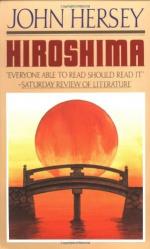
In 1950 John Hersey was considered one of the most promising young writers in the nation. His first novel, A Bell for Adano (1944), had won a Pulitzer Prize in 1945, while his journalistic masterpiece of 1946, Hiroshima, with its successful depiction of individual survivors of the atomic bombing of Japan, had an enormous emotional impact on both domestic and international audiences. His second novel, The Wall (1950), evoked a similar kind of emotional response from its readers. A classic description of the Holocaust, it still stands as one of the few books that has been able to relate in human terms the destruction of European Jewry by the Nazis. Hersey remained popular and prolific, publishing many works of fiction and nonfiction that deal with an enormous range of subjects and interests. However, he has been ignored by most literary scholars while others, such as Leslie Fiedler, have accused him of...
|
This section contains 7,550 words (approx. 26 pages at 300 words per page) |
|



