
 Print
Print Word
Word PDF
PDF|
This section contains 17,636 words (approx. 59 pages at 300 words per page) |

|
on John Ernst Steinbeck
Biography Essay
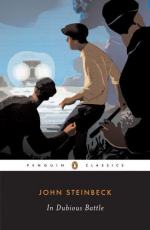
Through a career which spanned four decades, John Steinbeck was a novelist of people. His best books are about ordinary men and women, simple souls who do battle against dehumanizing social forces or who struggle against their own inhumane tendencies and attempt, sometimes successfully, sometimes not, to forge lives of meaning and worth. At the center of Steinbeck's thematic vision is a dialectic between contrasting ways of life: between innocence and experience, between primitivism and progress, and between self-interest and commitment to the human community. His most interesting characters, George Milton and Lennie Small in Of Mice and Men (1937), the paisanos of Tortilla Flat (1935), Doc Burton of In Dubious Battle (1936), Mack and the boys in Cannery Row (1945), and the Joads of The Grapes of Wrath (1939), struggle to resolve this personal and social conflict in a world of human error and imperfection.
In much of his work...
|
This section contains 17,636 words (approx. 59 pages at 300 words per page) |
|



