
 Print
Print Word
Word PDF
PDF|
This section contains 11,081 words (approx. 37 pages at 300 words per page) |

|
Dictionary of Literary Biography on Jean de La Fontaine
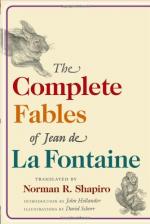
Jean de La Fontaine is best known for his Fables choisies, mises en vers (Selected Fables, Put into Verse), published in twelve books from 1668 to 1693. Comprising more than two hundred short poems divided more or less evenly among the books, the collection employs mostly encounters between speaking animals in order to illustrate moral dilemmas. Often a moralité (moral) is placed at the beginning or the end summing up the lesson to be learned from the narrative. By taking an age-old genre relying on a simple and moralistic format and putting it into a more sophisticated poetic idiom, La Fontaine quickly achieved for his fables the distinction of being the most popular of all French poetry, read with pleasure by children and adults alike all over the world. From the late seventeenth century on, La Fontaine's fables became an integral part of French pedagogy. French schoolchildren learned individual...
|
This section contains 11,081 words (approx. 37 pages at 300 words per page) |
|



