
 Print
Print Word
Word PDF
PDF|
This section contains 2,050 words (approx. 7 pages at 300 words per page) |

|
Encyclopedia of World Biography on James Fenimore Cooper
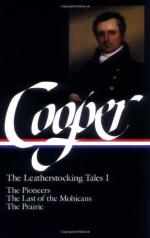
Novelist and social critic James Fenimore Cooper (1789-1851) was the first major American writer to deal imaginatively with American life, notably in his five "Leather-Stocking Tales." He was also a critic of the political, social, and religious problems of the day.
James Cooper (his mother's family name of Fenimore was legally added in 1826) was born in Burlington, N.J., on Sept. 15, 1789, the eleventh of 12 children of William Cooper, a pioneering landowner and developer in New Jersey and New York. When James was 14 months old, his father moved the family to a vast tract of wilderness at the headwaters of the Susquehanna River in New York State where, on a system of small land grants, he had established the village of Cooperstown at the foot of Otsego Lake.
Here, in the "Manor House," later known as Otsego Hall, Cooper grew up, the privileged son of the "squire" of a...
|
This section contains 2,050 words (approx. 7 pages at 300 words per page) |
|



