
 Print
Print Word
Word PDF
PDF|
This section contains 3,844 words (approx. 13 pages at 300 words per page) |

|
on James Agee
Biography Essay
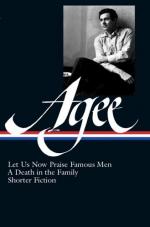
James Rufus Agee, novelist, poet, journalist, film critic, and screenwriter, is best known for a documentary study of three Alabama tenant-farming families in the midst of the Depression, Let Us Now Praise Famous Men, and an unfinished novel, A Death in the Family. Born in Knoxville, Tennessee, on 27 November 1909, Agee's childhood was marred by the death of his father, Hugh James Agee, in an automobile accident in May 1916, an event which Agee would draw on in both his published novels.
In 1919 Agee was enrolled at an Episcopalian boarding school, St. Andrew's, near Sewanee, Tennessee. During his five years at St. Andrew's, Agee formed a close personal friendship with one of the teachers, Father James Harold Flye. In 1924-1925 Agee attended Knoxville High School, and after a trip to Europe with Father Flye in the summer of 1925, he enrolled at Phillips Exeter Academy in Exeter, New Hampshire...
|
This section contains 3,844 words (approx. 13 pages at 300 words per page) |
|



