
 Print
Print Word
Word PDF
PDF|
This section contains 4,786 words (approx. 16 pages at 300 words per page) |

|
Dictionary of Literary Biography on Irving Howe
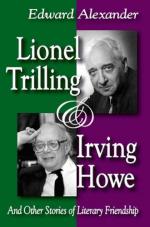
Irving Howe is the last of the generation of gifted writers and critics who have come to be known, after an important essay by Howe himself, as the "New York Intellectuals." Howe has been both continuator and elegist of that circle, which emerged on the national scene in the 1940s and included among its literary figures Lionel Trilling, Philip Rahv, and Alfred Kazin.
Howe's youthful experience as a radical activist in New York in the 1930s about which he has written in his autobiography, A Margin of Hope (1982), set the pattern for his later career. He has continued to be involved in politics and social issues, chiefly as editor of Dissent, a quarterly journal of democratic socialism that he founded in 1954 and continues to edit. Howe's career as a full-time academic began around the same time. He became a professor of English at Brandeis University in 1953, and the...
|
This section contains 4,786 words (approx. 16 pages at 300 words per page) |
|



