
 Print
Print Word
Word PDF
PDF|
This section contains 1,987 words (approx. 7 pages at 300 words per page) |

|
Encyclopedia of World Biography on Ira Gershwin
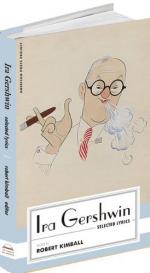
Ira Gershwin (1896-1983) captivated audiences worldwide during the 1920s and 1930s with his provocative lyrics and librettos. His 1932 Pulitzer Prize was the first ever for a musical comedy. In the 1940s his lyrics enhanced the scores of several motion picture classics.
Ira Gershwin emerged as a master of musical comedy during the 1920s and 1930s, when vaudeville was golden. With his memorable lyrics, Gershwin charmed the audiences of stage and screen and inspired the most popular singing stars of America and Europe. He strummed heartstrings with his dazzling show-stopping tunes and caused critics to notice an art form they had never before taken seriously. In collaboration with his younger brother, composer George Gershwin, the elder Gershwin put lyrics to the scores of vaudeville reviews and Broadway plays beginning in 1918. In 1932 he shared a Pulitzer Prize for the musical satire, Of Thee I Sing, and he collaborated on light...
|
This section contains 1,987 words (approx. 7 pages at 300 words per page) |
|



