World of Genetics on Heinrich Wilhelm Gottfried von Waldeyer-Hartz
Heinrich Wilhelm Gottfried von Waldeyer-Hartz was a professor of anatomy and histology who coined the word "chromosome" in 1886. Waldeyer, noting the ability of thread-like structures in the nucleus to be stained by the dye fuchsin, named them "chromo" meaning color, and "soma", meaning body. Waldeyer also coined the term "neuron." In 1884, he described an area in the pharynx near the tonsils that has come to be known as Waldeyer's tonsillar ring. His contributions were critical to the science of neurology and to the understanding and treatment of cancer.
Waldeyer was born in Germany in Hehlen, a small village near Braunschweig. In 1856, at the age of twenty, he attended Göttingen University where he studied mathematics and then medicine, specializing in anatomy. Waldeyer then taught at the university in Königsberg, Germany, for two years and then at the University of Breslau, Germany, for eight years. In 1872, he became professor of anatomy at the University of Strasbourg (at that time in Germany), where he remained for eleven years. On October 1, 1883, Waldeyer joined the faculty at the University of Berlin, Germany, as professor of anatomy and later served as the director of the department of anatomy for more than thirty years. Additionally, Waldeyer served as rector at the University of Berlin from 1889-1899; he retired in October 1916.
Waldeyer's first main contribution to modern science was in 1867, when he postulated that abnormal cell division led to cancer. Waldeyer's theory countered the contemporary authority Rudolf Virchow, the German pathologist and founder of cellular pathology. Virchow had written in his three-volume work, Die Krankhaften Geschwulste (1863-'67), that cancer originated in changes in the connective tissue. Waldeyer's explanation that cancer begins on a cellular level wasn't accepted until 1872, when Virchow's theory on the origin of cancer was finally recognized as erroneous and the legitimacy of Waldeyer's work was confirmed. Waldeyer also explained that the relocation of a single cancer cell could lead to the formation of secondary tumors elsewhere in the body. He wrote that early detection and treatment of cancer offered the best cure. His recommendations were especially significant when radiation and chemotherapy became standard cancer treatments.
In 1884 Waldeyer identified a ring of lymphoid tissue formed by the pharyngeal, palatine and lingual tonsils. This tissue, now referred to as Waldeyer's throat ring, forms a protective ring at the opening of the pharynx. The function of Waldeyer's ring is to provide immunity from certain antigens and to protect against oropharyngeal (throat and mouth) cancer. Waldeyer's ring is frequently involved in a form of cancer, termed non-Hodgkin's lymphoma, which originates in the lymphatic system.
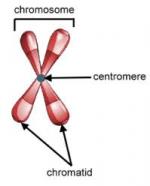
In 1888, Waldeyer suggested a name for the threads within the nucleus of a cell. German embryologist Oskar Hertwig had discovered the sphere of microscopic threads in the 1860's, and approximately twenty years later Waldeyer named the threadlike structures chromosomes.
Waldeyer's contributions to neurology followed upon the work of Camillo Golgi, an Italian pathologist. Golgi's work on the nervous system, which earned him the Nobel Prize in 1906, had laid the groundwork for further study of the nervous system. After Golgi's discovery of a particular type of nerve cell, now referred to as Golgi cells, Waldeyer was the first to hypothesize that the nervous system was comprised of individual cells. In 1891, he named these cells neurons and thus paved the way for the neuron theory, which is the cell theory of the nervous system.
This is the complete article, containing 565 words
(approx. 2 pages at 300 words per page).