
BookRags.com Literature Guides Literature
Guides
Criticism & Essays Criticism &
Essays
Questions & Answers Questions &
Answers
Lesson Plans Lesson
Plans
My Bibliography Periodic Table U.S. Presidents Shakespeare Sonnet Shake-Up
Research Anything:        
History | Encyclopedias | Films | News | Create a Bibliography | More... Login | Register | Help

Search "Heinrich Hermann Robert Koch"

Biographies Navigation
 

Heinrich Hermann Robert Koch Biography

Print-Friendly  Order the PDF version  Order the RTF version
About 3 pages (809 words)
Robert Koch Summary

Bookmark and Share Questions on this topic? Just ask!
Name: Heinrich Hermann Robert Koch
Birth Date: December 11, 1843
Death Date: May 27, 1910
Place of Birth: Clausthal, Germany
Place of Death: Baden-Baden, Germany
Nationality: German
Gender: Male
Occupations: physician, bacteriologist

Encyclopedia of World Biography on Heinrich Hermann Robert Koch

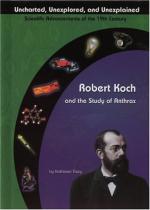
The German physician and bacteriologist Heinrich Hermann Robert Koch (1843-1910) devised many bacteriological techniques and established the bacterial causes of a number of infectious diseases.

Robert Koch was born at Clausthal, Hanover, on Dec. 11, 1843, the third of a family of 13. He enrolled in medical classes at the University of Göttingen in 1862, and in 1866 he passed the qualifying examinations. He spent some time in clinical study in Berlin but did not wish to engage in general practice. When the Franco-Prussian War broke out in 1870, he was accepted for service in the army.

In 1872 Koch was appointed district medical officer at Wollstein. That year he began his bacteriological research with a microscope his wife gave him. Following the publication of some of his early findings, Koch was appointed to the Imperial Health Office at Berlin in 1880. In 1885 he became professor of hygiene at the University of Berlin and director of the newly founded Institute of Hygiene at the university. In 1891 the Institute for Infectious Diseases was founded for him, and he acted as director until 1904.

Foundations of Bacteriology

One of the first diseases Koch studied was anthrax, an ancient and highly fatal cattle disease. While the bacillus associated with anthrax had been identified by C. J. Davaine in 1868, no significant advances had been made in the prevention or treatment of this disease. In addition, it had been noted that cattle became infected not only from other cattle but from grazing in fields where infected cattle had been kept years before. This observation seemed to discredit the bacillus as a causative agent.

Koch, attracted by the frequency of occurrence and the unusual behavior of anthrax, set out to solve the problem. He arrived at several valid conclusions: under certain conditions the anthrax bacillus forms spores which are viable but which remain dormant for several years, thus explaining the mystery of the infected fields; the integrity of the bacillus is maintained even though the infection passes through several generations of mice; and the cattle are usually inoculated with the bacillus by eating fodder soiled with the numerous organisms in excreta of infected animals.

In arriving at these conclusions, Koch acted on certain principles that are often referred to as "Koch's postulates": to prove that an organism is the specific cause of any disease, it must be present invariably in all cases; it must be isolated in pure culture; and when a susceptible host is inoculated with a live culture, the disease must be reproduced. Koch for the first time irrefutably proved the manner in which anthrax arises and is transmitted. Thus the foundations of medical bacteriology were laid, and rational principles of hygiene and epidemiology in man and animals were established.

Studies of Tuberculosis

In 1881 Koch announced his discovery of the tubercle bacillus. He isolated the organisms from tubercular lesions and grew them successfully in pure cultures. This was a remarkable achievement at that time, for the bacillus is fastidious in its food requirements and grows very slowly. However, Koch experienced several disappointments with his studies of tuberculosis. Having found that tuberculosis in cattle was produced by an organism which differed from that of the human variety in both cultural characteristics and virulence, he formed the opinion that human tuberculosis was not transmitted to cattle, and bovine tuberculosis could not be transmitted to man. This was completely disproved by the British Royal Commission on Tuberculosis in 1911. Koch's other disappointment was associated with tuberculin, a protein component extracted from a killed culture of tubercle bacilli. It has proved a valuable diagnostic tool, as Koch suggested, but it has no effect as a curative agent, although Koch originally offered it to the public as a treatment.

Another major discovery which revolutionized bacteriology was Koch's use of culture media which could be rendered solid, for example, blood serum by heating, meat broth by adding gelatin or agar, a product derived from seaweed. The advantage of growing bacteria on solid media is that isolated colonies are obtained which often have a characteristic appearance, thereby enabling one to select pure cultures easily. Thus it can be readily understood how within some 10 years a whole series of specific pathogens--including the causal agents of cholera, typhoid fever, and diphtheria; common pyogenic bacteria which cause suppuration in wounds; and varieties of intestinal flora--were isolated by Koch and others.

Almost every medical bacteriologist of the next generation was trained by Koch. His help was constantly in demand by the governments of his and other countries with microbiological problems, human or veterinary. He was always a hygienist who never forgot the essential importance of clean air, food, water, and soil in protecting populations from infective diseases. As a pure bacteriologist, he remained unequaled. His techniques are the basis of all modern bacteriological methods. In 1905 he received the Nobel Prize. He died in Baden-Baden on May 27, 1910.

This is the complete article, containing 809 words (approx. 3 pages at 300 words per page).

View More Summaries on Robert Koch
More Information
  • View Heinrich Hermann Robert Koch Study Pack
  • Search Results for "Heinrich Hermann Robert Koch"
  • Add This to Your Bibliography
  • More Products on This Subject
    Heinrich Hermann Robert Koch
    Koch was born on December 11, 1843. As one of thirteen children born to a mining engineer and his w... more

    Robert Koch
    Robert Koch pioneered principles and techniques in studying bacteria and discovered the specific ag... more


    Ask any question on Robert Koch and get it answered FAST!
    Answer questions in BookRags Q&A and earn points toward
    discounted or even FREE Study Guides and other BookRags products!
    Learn more about BookRags Q&A
    Copyrights
    Heinrich Hermann Robert Koch from Encyclopedia of World Biography. ©2005-2006 Thomson Gale, a part of the Thomson Corporation. All rights reserved.

    Join BookRagslearn moreJoin BookRags


    About BookRags | Customer Service | Report an Error | Terms of Use | Privacy Policy

