Forgot your password?  

Gerhard Domagk | Biography

This Biography consists of approximately 4 pages of information about the life of Gerhard Domagk.
This section contains 1,004 words
(approx. 4 pages at 300 words per page)

World of Chemistry on Gerhard Domagk

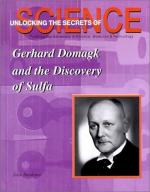
Gerhard Domagk was a biochemist who discovered sulfonamide therapy for bacterial infections. Prior to his work, only a few chemical compounds had been found effective against these infections, and most of these had serious side effects. Domagk was awarded the Nobel Prize in physiology or medicine in 1939 for this discovery, but the German government forced him to decline it. In 1947, he was awarded the Nobel Prize Medal. In presenting this award, Nanna Svartz of the Royal Caroline Institute said that Domagk's discovery "meant nothing less than a revolution in medicine." The introduction of sulfonamide therapy prior to World War II undoubtedly saved many thousands of lives.

Domagk was born October 30, 1895, in Lagow, Brandenburg, Germany, to Paul and Martha Reiner Domagk. His father was assistant headmaster of a school, and he sent his son to a grade school that specialized in the sciences. Domagk enrolled in the University of Kiel as a medical student in 1914. His studies, however, were almost immediately interrupted by World War I. He enlisted in the German Army, fought at Flanders, and was transferred to the eastern front in December of 1914, where he was wounded. He was then transferred to the medical corps. He served in several hospitals, and his experience attempting to treat wounds and infectious diseases with the inadequate tools of the time undoubtedly influenced the direction of his later research.

Domagk resumed his studies at the University of Kiel following the war and earned his medical degree in 1921. In 1924 he took up the post of lecturer of pathological anatomy at the University at Greifswald, and in 1925 he moved on to a similar post at the University at Münster. In 1927, Domagk took a leave of absence from the university, which reshaped his career. He left to work in the laboratories of a company called I. G. Farbenindustrie, where he would remain for the rest of his professional life.

Domagk's career was profoundly influenced by the work of Paul Ehrlich. In 1907, Ehrlich had discovered arsphenamine, a compound specifically developed to be toxic to trypanosomes, and in 1909 this drug had been found to be quite effective against the bacterium that causes syphilis . Ehrlich's work had stimulated a number of searches for other antibacterials, and Domagk systematically continued this work at I. G. Farbenindustrie.

Domagk investigated thousands of chemicals for their potential as antibacterials. He would first test them against bacterial cultures in the test tube, then find the doses tolerated by animals such as mice, and lastly determine if compounds that worked in the test tube also worked against bacteria in living animals. For five years Domagk searched in vain for a "magic bullet" that would be toxic to bacteria and not to animals. His success illustrates Pasteur's dictum that chance favors the prepared mind. Methodically checking thousands of compounds for antibacterial activity, Domagk found in 1932 that a red leather dye showed a small effect on bacteria in the test tube. Developed by others at the company, the compound was called Prontosil Rubrum, and it proved quite non-toxic to mice.

Domagk's original experiment to determine the effectiveness of Prontosil Rubrum was straightforward. He injected twenty-six mice with a culture of hemolytic streptococcal bacteria. Fourteen mice served as controls, receiving no therapy, and all died within four days, as expected from previous experiments with untreated animals. The remaining twelve mice were injected with a single dose of Prontosil Rubrum an hour and a half after being infected with the bacteria. All twelve survived in good condition. In 1932, I. G. Farbenindustries began clinical testing of Prontosil Rubrum. For reasons that are unknown, however, Domagk delayed publishing the results of his experiment for three years. But it is clear that he understood its implications. During this time his daughter contracted a streptococcal infection from a needle prick and failed to respond to traditional therapies. As she lay near death, Domagk injected her with Prontosil Rubrum , and she subsequently recovered.

There was some initial skepticism when Domagk first published his experimental results, but rapid replication of his findings led to widespread acceptance of the value of Prontosil Rubrum therapy. Throughout Europe, hospitals treated a variety of illnesses--including pneumonia, meningitis, blood poisoning, and gonorrhea--with Prontosil Rubrum and closely allied compounds. Subsequent laboratory studies have shown that it is only a part of the Prontosil Rubrum molecule, the sulfonamide group itself, that is responsible for its effect on bacteria. Moreover, the compound does not kill bacteria but interferes with their metabolism and therefore with their ability to reproduce.

Although the importance of his work was widely recognized by physicians and fellow scientists, the world of politics obstructed formal acknowledgement of his discovery. Carl von Ossietzky , a German pacifist incarcerated in a prison camp, had been awarded the Nobel Peace Prize in 1936, and Hitler had declared that no German citizen could accept a Nobel Prize. When he was awarded the prize in 1939, Domagk notified the German government and was promptly arrested. He was soon released but was forced to decline the prize. He was awarded the Nobel Medal after the war, but the prize money had reverted to the foundation.

During the late 1930s and throughout World War II, Domagk continued to investigate other compounds for their antibacterial effects. He concentrated considerable effort on anti-tubercular drugs, recognizing the problem of increasing resistance to streptomycin. His work resulted in some drugs of limited use against tuberculosis , though the class of compounds he studied proved to be somewhat toxic. Domagk retired in 1958 but remained active in research. He spent the last few years of his career attempting without success to find an anti-cancer drug.

In addition to the Nobel Prize, Domagk received numerous other accolades. In 1959, he was elected to the Royal Society of London. He was awarded medals by both Spain and Japan, and several German universities conferred honorary doctorates upon him.

Domagk married Gertrude Strube in 1925. They had four children, three sons and a daughter. Domagk died of a heart attack on April 24, 1964.

This section contains 1,004 words
(approx. 4 pages at 300 words per page)
Copyrights
Gerhard Domagk from World of Chemistry. ©2005-2006 Thomson Gale, a part of the Thomson Corporation. All rights reserved.
Follow Us on Facebook
Homework Help