
| Name: |
Gabriela Mistral |
| Birth Date: |
|
| Death Date: |
|
| Place of Birth: |
|
| Place of Death: |
|
| Nationality: |
|
| Gender: |
|
| Occupations: |
|
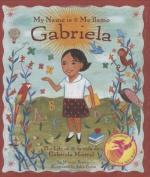
Gabriela Mistral (1889-1957) was a Chilean poet and educator. Her poetry earned her the Nobel Prize for literature in 1945.
Gabriela Mistral was born Lucila Godoy Alcaya on April 6, 1889, at Vicuña, a small town in northern Chile. Her parents were schoolteachers, but her father abandoned the family when she was 3. Tutored by her mother and a stepsister, also a teacher, she began instructing in 1904, achieving success in numerous high schools. In 1922 the Mexican minister of education, José Vasconcelos, invited her to assist in his reform program, and the apex of this career came the following year, when she was awarded the Chilean title "Teacher of the Nation." In 1925 she retired but remained active.
Gabriela Mistral devoted much time to diplomatic activity, serving as honorary consul at Madrid, Lisbon, Nice, in Brazil, and at Los Angeles. She also served as a representative to the League of Nations and the United Nations. In fulfillment of these responsibilities, she visited nearly every major country in Europe and Latin America. She also continued her early literary pursuits.
First literary recognition came in 1914 with Sonnets on Death (Sonnets de la muerte). The suicide in 1909 of her first love occasioned the poem, and shortly afterward her second love married someone else, causing her early poetry to reflect personal anguish.
In 1922 Gabriela Mistral's first book, Desolation (Desolación), a collection of poems previously published in newspapers and magazines, was released through the efforts of Federico de Onís, Director of the Hispanic Institute of New York. Motherhood, religion, nature, morality, and love of children are present with an overriding theme of personal sorrow. Thus, her international reputation was established, and critics marked her poetry--direct and simple without adornment--as a turn from modernism in Latin America.
Two years later her second book, Tenderness (Ternura), appeared; it contained some of the poems from Desolation and several new ones. Fourteen years passed before the next, Felling (Tala), appeared. It was much happier in tone, containing among other themes American scenes, "lullabies" for children, and a metaphysical acceptance of death--all written in a much more polished style than that of the works previously noted.
Her last book, Wine Press (Lagar), in 1954, dealt with most of the subjects previously treated but in a different manner. The winning of the Nobel Prize for literature in 1945 did not assuage the loss by suicide of her nephew, adopted and raised as her son, and of her good friends Stefan Zweig and his wife. Furthermore, by 1944 she had developed diabetes. The tone of much of her last poetry was that of one patiently awaiting death with complete faith in God.
Gabriela Mistral went to the United States for medical aid in 1946, living in various locales and, after her appointment to the United Nations, moving to Long Island. It was there that she died of cancer on Jan. 10, 1957.
This is the complete article, containing 477 words
(approx. 2 pages at 300 words per page).
View More Summaries on Gabriela Mistral

