
BookRags.com Literature Guides Literature Guides Criticism/Essays Criticism/Essays Biographies Biographies My Bibliography Periodic Table U.S. Presidents Shakespeare Sonnet Shake-Up
Research Anything:        
History | Encyclopedias | Films | News | Create a Bibliography | More... Login | Register | Help

Search "Edward Steichen"

Biographies Navigation
 
Not What You Meant?  There are 4 definitions for Steichen.

Edward Steichen Biography

Print-Friendly  Order the PDF version  Order the RTF version
About 2 pages (599 words)
Edward Steichen Summary

Bookmark and Share
Name: Edward Steichen
Birth Date: March 27, 1879
Death Date: March 25, 1973
Place of Birth: Luxembourg, Germany
Place of Death: West Redding, Connecticut, United States
Nationality: American
Gender: Male
Occupations: photographer, painter, museum curator

Encyclopedia of World Biography on Edward Steichen

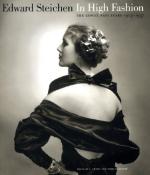
Edward Steichen (1879-1973) was an American photographer, painter, and museum curator who helped transform photography into an art form. At the turn of the century his photographs were hailed for their artistic quality. In the 1920s he produced a new style of fashion illustration and portraiture for magazines.

Edward Steichen was born in Luxembourg on March 27, 1879. The family settled in Hancock, Michigan, in 1881, where the father worked in a copper mine. Eduard--as he then spelled his name--went to Pio Nono College near Milwaukee in 1888 and showed such talent for drawing that on leaving school he became an apprentice at a Milwaukee lithographing company. In 1895 he bought a camera. Three years later his photographs, which a critic called "ultra expressionistic," were accepted at the Second Philadelphia Salon of Pictorial Photography.

Meanwhile, Steichen had organized the Milwaukee Art Student's League and served as its first president. He decided to study painting in Paris, and on his way there in 1900 he stopped in New York to meet Alfred Stieglitz, who was America's foremost photographer and leader of a movement to gain for photography recognition as a fine art. They became close friends. Steichen was confounder with Stieglitz of the Photo-Secession, an organization dedicated to photography as a fine art, and its exhibition gallery, called "291." The gallery exhibited photographs and introduced to America paintings, drawings, and sculpture by such modern artists as Paul Cézanne, Henri Matisse, Pablo Picasso, and Constantin Brancusi. Steichen's photographs were widely exhibited; among the most famous were his portraits of J. P. Morgan and Auguste Rodin.

During World War I Steichen was in command of all aerial photography of the American Expeditionary Force; he retired as lieutenant colonel in 1919 and settled in Voulangis, France. He gave up painting and abandoned the soft-focus and heavily retouched style that had won him fame as a photographer. He used the camera directly, emphasizing sharpness and texture. In 1922 he returned to America and a year later opened a commercial studio in New York, specializing in advertising photography. For Vanity Fair and Vogue magazines he produced fashion illustrations and portraits of outstanding personalities. He closed his studio in 1938 to devote his time to plant breeding. When America entered World War II, he was commissioned lieutenant commander and put in command of all Navy combat photography.

At the age of 68 Steichen was named director of photography at the Museum of Modern Art in New York. Of the many exhibitions he created, the largest and most famous was "The Family of Man." This exhibition of 503 photographs toured throughout America and overseas. The book of the same title became a best seller. His involvement as a curator helped promote photography to the status of an acknowledged art form. In 1961 Steichen held an exhibition of his own photography at the Museum of Modern Art; a year later he retired to Connecticut. His autobiography, A Life in Photography, appeared in 1963, the same year he was awarded the Medal of Freedom by President John F. Kennedy.

In later life Steichen continued to experiment with new photographic techniques. At his 90th birthday celebration, he said, "When I first became interested in photography, I thought it was the whole cheese. My idea was to have it recognized as one of the fine arts. Today I don't give a hoot ...about that. The mission of photography is to explain man to man and each man to himself. And that is no mean function. Man is the most complicated thing on earth and also as naive as a tender plant."

He died in Connecticut in 1973.

This is the complete article, containing 599 words (approx. 2 pages at 300 words per page).

View More Summaries on Edward Steichen
More Information
  • View Edward Steichen Study Pack
  • 4 Alternative Definitions
  • Search Results for "Edward Steichen"
  • Add This to Your Bibliography
  • More Products on This Subject
    Steichen, Edward (Jean)
    (born March 27, 1879, Luxembourg—died March 25, 1973, West Redding, Conn., U.S.) Luxembourg-b... more

    Edward Steichen
    You know... that a blank wall is an apalling thing to look at. The wall of a museum - a canvas - a ... more


    Copyrights
    Edward Steichen from Encyclopedia of World Biography. ©2005-2006 Thomson Gale, a part of the Thomson Corporation. All rights reserved.

    Join BookRagslearn moreJoin BookRags


    About BookRags | Customer Service | Report an Error | Terms of Use | Privacy Policy

