
 Print
Print Word
Word PDF
PDF|
This section contains 4,100 words (approx. 14 pages at 300 words per page) |

|
Dictionary of Literary Biography on Edward Lear
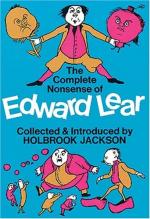
Edward Lear's illustrated nonsense verse, narratives, alphabets, and botanies are early and central examples of a type of literature for children that endures because it conveys humorous, vigorous, and accessible images of a skewed reality. Known as the laureate of nonsense, for the last 150 years Lear's work has been equally enjoyed by adults. In the nineteenth century, no less a critic than John Ruskin called the limericks "refreshing, and perfect in rhythm" and asserted, "I really don't know any author to whom I am half so grateful, for my idle self, as for Edward Lear. I shall put him first of my hundred authors." In his 1927 essay on Lear, Aldous Huxley claims that the nonsense author is one of the "few writers whose works I care to read more than once," because "Lear had the true poet's feelings for words--words in themselves, precious and melodious, like phrases of...
|
This section contains 4,100 words (approx. 14 pages at 300 words per page) |
|



