 Print
Print Word
Word PDF
PDF|
This section contains 3,048 words (approx. 11 pages at 300 words per page) |

|
Authors and Artists for Young Adults on Edward Hopper
Edward Hopper was one of the quieter revolutionaries of twentieth-century American painting. He used flat, boxy lines, somber tones, and a uniquely idiosyncratic attention to detail to depict scenes that ranged from the modern urban landscapes of New York City in the 1930s to vintage rural structures in New England. Another favorite subject for Hopper's brush was interior scenes marked by an unusual tension; how he managed to portray such acres of silence between two figures--usually a man and a woman--remains one of the mysteries of his artistry.
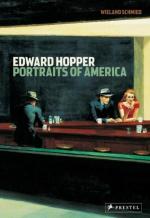
Hopper's very surname has lent itself to the term "Hopper-esque," an adjective used to tag a scene that looks vintage American and feels oppressive or desolate in some subtle way. "No American painter has influenced popular culture more deeply," declared Time's Robert Hughes. Hopper's 1942 view of an all-night city diner, Nighthawks, remains one of contemporary American art's most enduring...
|
This section contains 3,048 words (approx. 11 pages at 300 words per page) |
|