
 Print
Print Word
Word PDF
PDF|
This section contains 2,097 words (approx. 7 pages at 300 words per page) |

|
Dictionary of Literary Biography on Djuna Barnes
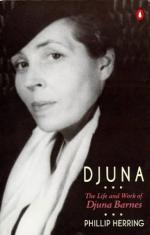
Journalist, dramatist, novelist, poet, short-story writer, and, most of all, enigmatic figure, Djuna Barnes has protected her privacy for the last forty-five years. Indeed, Douglas Messerli says that she is "perhaps the most private writer since Henry James." One is quick to add J. D. Salinger to the list, but unlike the literary canons of James and Salinger, most of her writing, not to mention her drawings, remains uncollected and thus unavailable to a reading public who might willingly exchange a desire to know about the author for an opportunity to learn about the work. Messerli's description is appropriate: "She is a legend who is unknown."
It was not always that way. Janet Flanner may be correct when she argues that Barnes was the most significant woman writer in Paris in the 1920s, for at that time the thirty-year-old Barnes was seen regularly and was publishing widely in...
|
This section contains 2,097 words (approx. 7 pages at 300 words per page) |
|



