
 Print
Print Word
Word PDF
PDF|
This section contains 3,373 words (approx. 12 pages at 300 words per page) |

|
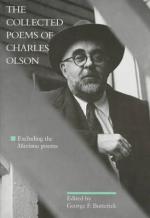
Dictionary of Literary Biography on Charles (John) Olson
Charles Olson emerged at the mid-century with a manifesto for a new poetry, "Projective Verse," exactly at a time when other American poets had not only rejected the modernist heritage of Ezra Pound and William Carlos Williams but had retreated to an orthodoxy of verse grounded in the prosody and themes of seventeenth-century English lyric. In 1950, when Olson's manifesto appeared in the journal Poetry New York, T.S. Eliot's doctrine of closed verse reigned in the mainstream literary journals and in the university. Eliot's stern rule over poetry was accepted without question because on the surface, at least, it seemed to relieve American poets of the burden of political argument and factionalism in their verse and offered a return to a pure source of lyric from which to refresh language and technique after long years of social turmoil. Now that World War II was over, and the more...
|
This section contains 3,373 words (approx. 12 pages at 300 words per page) |
|



