
 Print
Print Word
Word PDF
PDF|
This section contains 1,550 words (approx. 6 pages at 300 words per page) |

|
Encyclopedia of World Biography on Auguste Rodin
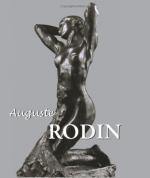
The French sculptor Auguste Rodin (1840-1917) conceived of his sculpture largely as volumes existing in space, as materials to be manipulated for a variety of surface effects. Thus he anticipated the aims of many 20th-century sculptors.
Auguste Rodin, the son of a police inspector, was born in Paris on Nov. 12, 1840. He studied drawing under Horace Lecoq de Boisbaudran and modeling under the sculptor Jean Baptiste Carpeaux at the School of Decorative Arts in Paris (1854-1857). Simultaneously Rodin studied literature and history at the Collège de France. Rejected three times by the École des Beaux-Arts, he supported himself by doing decorative work for ornamentalists and set designers.
In 1862, as a result of the death of his sister Maria, who had joined a convent, Rodin attempted to join a Christian order, but he was dissuaded by the perceptive father superior. Rodin continued as a decorator by day...
|
This section contains 1,550 words (approx. 6 pages at 300 words per page) |
|



