
 Print
Print Word
Word PDF
PDF|
This section contains 4,185 words (approx. 14 pages at 300 words per page) |

|
Dictionary of Literary Biography on Anna Sewell
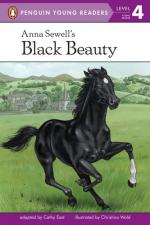
Anna Sewell's only book, Black Beauty: The Autobiography of a Horse (1877), has been considered as a work of humane literature, a moral tale, and an animal fable, which were all popular genres in the later nineteenth century. Unlike many of the works with which it has been compared, however, Black Beauty has come to be lauded as the best-loved animal story and a classic of children's literature. Its missionary aim to "induce kindness, sympathy and an understanding treatment of horses" was as timely as it was far-reaching: as the animal most relied upon for all modes of carriage and transport on both sides of the Atlantic, the horse was most apt to be abused.
The book was appropriated for its propagandistic capabilities first by George Angell, founder of the Massachusetts Society for the Prevention of Cruelty to Animals, and later by the Royal Society for the Prevention of...
|
This section contains 4,185 words (approx. 14 pages at 300 words per page) |
|



