
 Print
Print Word
Word PDF
PDF|
This section contains 2,131 words (approx. 8 pages at 300 words per page) |

|
Encyclopedia of World Biography on Akio Morita
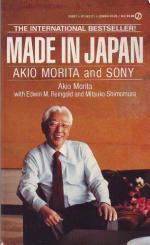
Akio Morita (1921-99), along with a few other entrepreneurs, embodied the postwar recovery and growth of Japanese industry. Morita and Sony Corporation, which he cofounded with Masaru Ibuka, challenged conventional notions about Japan's "economic miracle." The energy and inventiveness of small, independent companies like Sony, not keiretsu (industrial conglomerate arrangements) or the Ministry of International Trade and Industry (MITI), were the impetus for Japan's postwar economic development; their dependable high technology products changed the image of Japanese exports abroad.
Akio Morita was born January 26, 1921, the first son and fifteenth-generation heir to a sake-brewing family in Kosugaya village near Nagoya. Influenced as a boy by his mother's love of classical music (his family was one of the first to own an RCA Victrola in Japan), Morita developed a keen interest in electronics and sound reproduction. He became so engrossed in his electronic experiments, even building his own ham radio...
|
This section contains 2,131 words (approx. 8 pages at 300 words per page) |
|



