
BookRags.com Literature Guides Literature
Guides
Criticism & Essays Criticism &
Essays
Questions & Answers Questions &
Answers
Lesson Plans Lesson
Plans
My Bibliography Periodic Table U.S. Presidents Shakespeare Sonnet Shake-Up
Research Anything:        
History | Encyclopedias | Films | News | Create a Bibliography | More... Login | Register | Help

Search "Adolphe Appia"

Biographies Navigation
 
Not What You Meant?  There are 4 definitions for Appia.

Adolphe Appia Biography

Print-Friendly  Order the PDF version  Order the RTF version
About 2 pages (666 words)
Adolphe Appia Summary

Bookmark and Share Know this topic well? Help others and get FREE products!
Name: Adolphe Appia
Birth Date: 1862
Death Date: February 29, 1928
Place of Birth: Geneva, Switzerland
Nationality: Swiss
Gender: Male
Occupations: stage designer, lighting designer

Encyclopedia of World Biography on Adolphe Appia

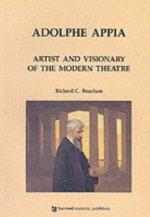
Adolphe Appia (1862-1928) developed theories of staging, use of space, and lighting which have had a lasting influence on modern stagecraft.

Adolphe Appia was born in 1862 in Geneva, Switzerland. His father, Doctor Louis Paul Amedee Appia, was a highly respected physician. Little is known about Adolphe's mother, Anna, who died when he was 24 years old. Appia's father was a stern Calvinist who was aloof and forbidding to his children, factors that contributed to the young Appia's shyness and introverted nature. The fact that the young Appia suffered from a stutter also must have made him more withdrawn. From an early age Appia had an inclination for the theater, but he grew up in an atmosphere that discouraged such interests. Appia, however, gained his father's permission to study music and in that way was able to pursue his love of the theater.

Appia was especially drawn to Wagner's operas and his theories of staging them. Although he admired the operas, Appia had no love for the use of the proscenium stage, elaborate costumes, or painted sets. Instead, he favored powerful, suggestive stagings that would create an artistic unity, a blending of actor, stage, lighting, and music. After a long study of the operas, Appia concluded that there was disunity because of certain jarring visual elements. The moving actor, the perpendicular settings, and the horizontal floor were in conflict with one another. He theorized that the scenery should be replaced with steps, ramps, platforms, and drapes that blended with the actor's movements and the horizontal floor. In this way the human presence and its beauty would be accented and enhanced. For Appia, space was a dynamic area that attracted both actor and spectator and brought about their interaction. Complementing his concept of space was his belief that lighting should be used to bring together the visual elements of the drama.

Appia, to gain his effect, studied every scene of the opera and worked out how the relationship of actor, scene, dialogue, music, and lighting combined to create a unified harmony. In 1906 he met and was influenced by Emile Jacques-Dalcroze (1865-1960). Dalcroze was the inventor of Eurythmics, a system in which his students responded rhythmically to musical scores. Working with Dalcroze, Appia evolved his own theory that the rhythm inherent in a text is the key to every gesture and movement an actor uses during a performance. He concluded that the mastery of rhythm could unify the spatial and other elements of an opera into a harmonious synthesis.

For most of his life Appia worked alone sketching and writing books and essays regarding his theories. Other innovators such as Gordan Craig (1872-1966) and Jacques Copeau (1879-1949) recognized his genius. Among Appia's important publications were The Staging of Wagner's Musical Dramas (1895), Music and Stage Setting (1899), and The Work of Living Art (1921).

Late in his life, in the 1920s, Appia began to receive the recognition he merited. In 1923 he staged Tristan and Isolde for Arturo Toscanini, then artistic director of La Scala. In 1924 he designed the staging for two parts of the Ring cycle in Basel. In 1925 he designed the settings and costumes for a production of Prometheus, also staged in Basel. The productions were not praised universally. Indeed, the conservative critics who chose to see Wagner as he had always been performed with traditional staging found Appia too "Calvinistic" for their tastes. Nevertheless, Appia's genius was finally recognized and his theories prevailed in spite of the critics. His theories of staging, use of space, and lighting have had a lasting influence on modern stagecraft.

When Appia died on February 29, 1928, his friend and follower Jacques Copeau wrote a tribute in which he accurately summed up the "Master's" radical reform of the stage: "For him, the art of stage production in its pure sense was nothing other than the embodiment of a text or a musical composition, made sensible by the living action of the human body and its reaction to spaces and masses set against it."

This is the complete article, containing 666 words (approx. 2 pages at 300 words per page).

View More Summaries on Adolphe Appia
More Information
  • View Adolphe Appia Study Pack
  • 4 Alternative Definitions
  • Search Results for "Adolphe Appia"
  • Add This to Your Bibliography
  • More Products on This Subject
    Adolphe Appia
    Adolphe Appia (* September 1 1862 in Geneva; † February 29 1928 in Nyon), son of Red Cross co-foun... more


    Ask any question on Adolphe Appia and get it answered FAST!
    Answer questions in BookRags Q&A and earn points toward
    discounted or even FREE Study Guides and other BookRags products!
    Learn more about BookRags Q&A
    Copyrights
    Adolphe Appia from Encyclopedia of World Biography. ©2005-2006 Thomson Gale, a part of the Thomson Corporation. All rights reserved.

    Join BookRagslearn moreJoin BookRags


    About BookRags | Customer Service | Report an Error | Terms of Use | Privacy Policy

