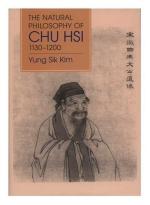
Search "Zhu Xi"
|

|
About 408 pages (122,363 words) in 18 products |
|

summary from source:

Biography of Chu Hsi
2,556 words, approx. 9 pages
 Chu Hsi (1130-1200) was one of the greatest Chinese scholars and philosophers. The system of Neo-Confucianism of which Chu Hsi is regarded as the spokesman represents a summary of doctrines of his predecessors as well as original ideas of his own....


Encyclopedia and Summary Information

summary from source:

Zhu Xi (Chu Hsi) (1130–1200) Summary
1,465 words, approx. 5 pages Zhu Xi (Chu Hsi)(1130–1200) Zhu Xi was a leading scholar, thinker, and teacher of the revival of philosophical Confucianism known at the time as Daoxue (learning of the way), often referred to as neo-Confucianism. The prolific author of texts...
summary from source:

Zhu Xi Summary
570 words, approx. 2 pages (1130–1200), Chinese synthesizer of neoConfucianism. Zhu Xi (Chu Hsi) was born in Youzi in Fukien province; he is perhaps the greatest neo-Confucian philosopher. He developed and clarified the metaphysics of two earlier philosophers, Cheng Yi...
summary from source:

Chu Hsi Summary
68 words, approx. 1 pages fl. c. 1175 Chinese scholar who stated in his Chu Tsi Shu Chieh Yao that fossils were once living organisms. The work also contains discussion of cosmology, and Chu maintained that the universe had been created by "violent friction,"...
summary from source:

Zhu Xi Summary
2,409 words, approx. 8 pages ZHU XI (1130–1200), philosopher, scholar, and formulator of what would for centuries be regarded as mainstream neo-Confucianism. The son of an official, Zhu Xi passed the highest civil service examination when he was only eighteen. In 1151 he...
summary from source:

Zhu Xi Information
2,659 words, approx. 9 pages
 Zhu Xi or Chu Hsi (born October 18, 1130, Yuxi, Fujian province, China – died April 23, 1200, China) was a Song Dynasty (960-1279) Confucian scholar who became the leading figure of the School of Principle and the most influential rationalist...


Literary Criticism
summary from source:

Critical Essay by John Borthrong
21,114 words, approx. 70 pages
 In the following essay, Borthrong contends that although Chu Hsi's views on ethics have been criticized as unoriginal and derivative, they display an ingenious approach based on the concept of humanity. Borthrong goes on to explore how Chu Hsi's conception of jen and ch’eng contribute to his views on the development of one's full humanity.
summary from source:

Critical Essay by William Theodore De Bary
13,906 words, approx. 46 pages
 In the essay below, De Bary examines the way in which the interpretation of Chu Hsi's teachings concerning the learning of the mind has resulted in confusion regarding the role of the “mind-and-heart” in his philosophy.
summary from source:

Critical Essay by Allen Wittenborn
12,849 words, approx. 43 pages
 In the essay below, Wittenborn studies Chu Hsi's theory of the mind, maintaining that although the theory represents the least successful facet of Chu Hsi's philosophical synthesis, his investigation of this issue resulted in a theory of knowledge rooted in a “firm psychological foundation.” Wittenborn further contends that Chu Hsi argues convincingly for the existence of li, or constitutive principle, rather than simply presupposing its existence, as did many of his predecessor...


|
About 408 pages (122,363 words) in 18 products |
|
|