Yukio Mishima ( 1925-01-14 - 1970-11-25 ) was the pen name of Kimitake Hiraoka, a Japanese novelist, playwright, essayist and short story writer. Contents 1 Sourced 1.1 Confessions of a Mask (1949) 1.2 The Sound of Waves (1956) 1.3 Sun and Steel (1968)...
Yukio Mishima (1925-1970) was a Japanese novelist and playwright. He wrote in a multitude of styles, from ornate to plain, and dealt with a variety of subjects drawn from both literary sources and contemporary life. Born and raised in Tokyo, Yukio...
More than two decades after his death, Mishima Yukio is arguably still the most famous writer modern Japan has produced. The reasons for this fame are both complex and controversial. His critics may suggest that his notorious death by seppuku, or...
Life magazine once called Yukio Mishima "the Japanese Hemingway," while Japan's first Nobel laureate, Yasunari Kawabata, "declared that a 'writer of his caliber appears only once every 200 or 300 years,'" as reported in the Economist. Mishima was a...
Yukio Mishima (三島 由紀夫, Mishima Yukio?) was the public name of Kimitake Hiraoka (平岡 公威, Hiraoka Kimitake?, January 14, 1925–November 25, 1970), a Japanese author and...
Yukio Mishima was a Japanese writer, actor and political activist who killed himself on Nov 25, 1970. Mishima's writings attacked the way in which Japan's society had evolved after World War II, and attempted to prove the country was losing its soul with its...
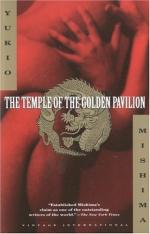
An examination of Japanese and German literary development post World War 1939-1945 is presented with reference to Mishima Yukio's novel 'Kinkakuji' and Heinrich Boll's novel, 'Billard um Halbzehn.' Both authors demonstrate a desire to destroy monuments representative of an unsatisfactory post-war social order. For...
Edward G. Seidensticker, known for his English translation of the classic ''Tale of Genji'' and translations of works by modern Japanese authors such as Yasunari Kawabata, died at a Tokyo hospital Sunday, a long-time friend said Monday. He was 86. He had...
Takeshi Kawamura, Japan's avant-garde director and writer, brought his production, ''Aoi/Komachi,'' to New York audiences for a three-day run to highlight Noh as part of the Japan Society's centennial celebration. Kicking off the ''Noh -- NOW!'' spring season, Kawamura put a very...
In the following essay, Nemoto analyzes parallels in the post-World War II novels of Mishima and Heinrich Böll, focusing on attitudes toward destruction.